


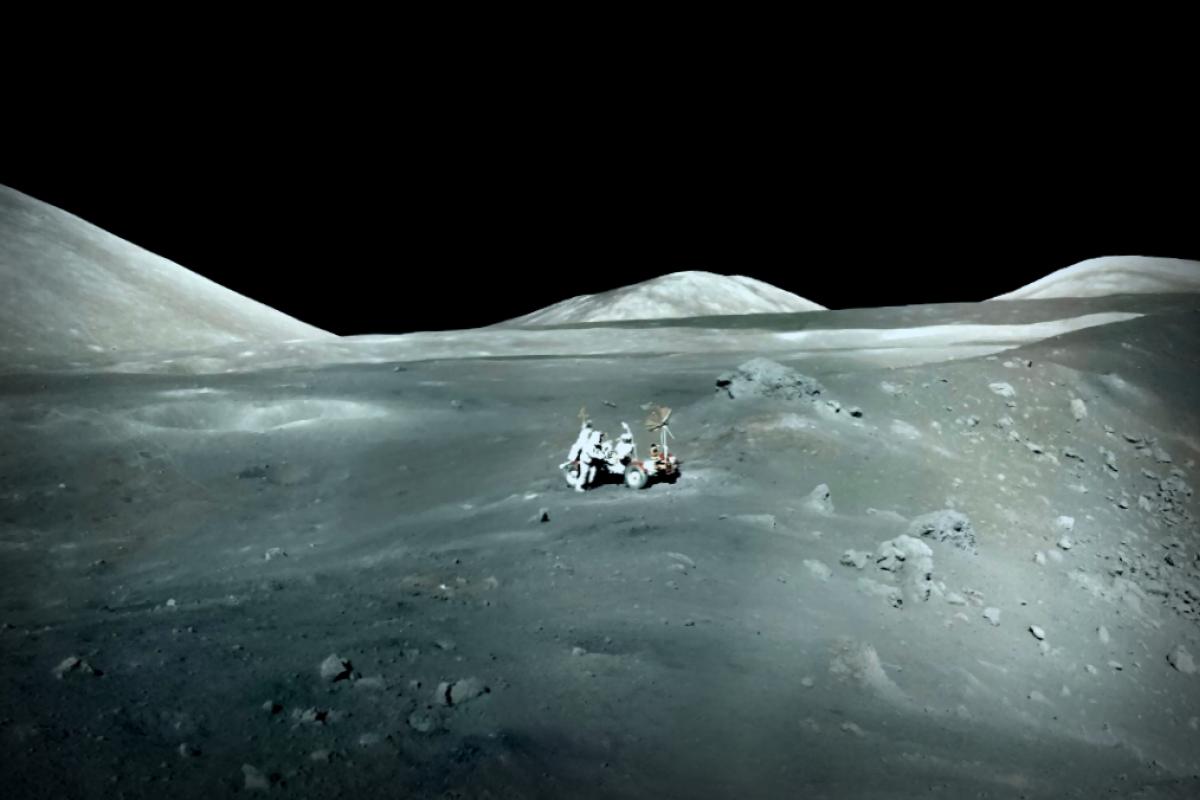
On November 14, 2025, researchers made a groundbreaking announcement about the Moon’s internal structure, unveiling a composition that surprisingly mimics the dense interior of Earth. This revelation, based on seismic data and lunar sample analysis from March 2025, challenges long-held notions regarding the Moon’s hidden layers and how they formed. Furthermore, findings from June 9, 2025, suggest that specific minerals from the Moon could significantly enhance water management technologies back on Earth.
How Scientists Confirmed the Moon’s Inner Structure
To figure out what’s going on inside the Moon, scientists set up seismometers on its surface to track internal vibrations and map out density changes. This method, shared in reports on November 5, 2025, allowed them to create a vivid depiction of the Moon’s inner workings. An examination of lunar rock samples returned from past missions offered direct proof of mineral structures deep within the Moon’s core. Plus, combining geophysical models with data from the Apollo missions has sharpened our grasp of the seismic waves, leveling up our understanding of the Moon’s insides.
Earth-Like Characteristics Discovered Within the Moon
The research uncovered a partially molten layer sitting just beneath the crust, echoing the dynamics of Earth’s mantle, a finding previously hinted at in reports from September 26, 2025. The analysis indicated the Moon’s core holds iron-rich alloys and silicates closely resembling terrestrial materials, a theory suspected since March 16, 2025. Unexpected density readings suggest the Moon has a solid inner core wrapped in liquid, mirroring Earth’s structure.
Breaking Down Previous Myths About Lunar Composition
The new data flies in the face of previous models, which envisioned a consistently dry interior. Instead, the presence of hydrated minerals and volatile elements, which came to light on November 5, 2025, suggests a much more complex lunar composition. Evidence also points away from a fully distinct core, indicating a mixed structure containing Earth-like metallic elements reported on September 26, 2025. This new information reaffirms what many scientists believed—that the Moon shares origins with Earth, as suggested by findings back in March 16, 2025.
Understanding the Moon’s Formation Journey
The similarities between the Moon’s interior and Earth’s provide strong support for the giant impact hypothesis. This theory posits that a Mars-sized body rammed into early Earth around 4.5 billion years ago, flinging out debris that would become the Moon while retaining Earth-like characteristics. These findings also shed light on the Moon’s thermal history, implying that it keeps a warm, active core despite its smaller mass. This correlation with past volcanic activity links earlier lunar eruptions to confirmed internal heat sources.
Innovative Uses for Lunar Minerals
Scientists have discovered that certain Moon-based minerals are highly effective at filtering and purifying water. Their potential could be a game changer for improving water management systems, particularly in drought-stricken areas on Earth, as noted on June 9, 2025. The impact of these resources could play a vital role in enhancing water security globally by optimizing desalination techniques using materials sourced from the Moon. Furthermore, investigating extraction methods from lunar regolith may support sustainable resource management for future space explorations, according to recent studies.
Looking Ahead: Future Research and Exploration
Future expeditions like Artemis are set to utilize more advanced seismometers, enabling even better mapping of the Moon’s interior. Global collaboration aims to analyze additional samples, building upon the confirmations from 2025 and refining our models. Moreover, integrating AI-driven simulations may help predict the long-term stability of the Moon based on its newfound Earth-like features, unlocking exciting pathways for lunar exploration.