


Researchers at the Institute for Bioengineering of Catalonia (IBEC) and West China Hospital Sichuan University have reported an exciting breakthrough in the fight against Alzheimer’s disease. Targeted at mouse subjects, this innovative study highlights a potential nanotechnology-driven treatment that could reverse cognitive decline by reinforcing the blood-brain barrier and eliminating harmful proteins that are often associated with the disease.
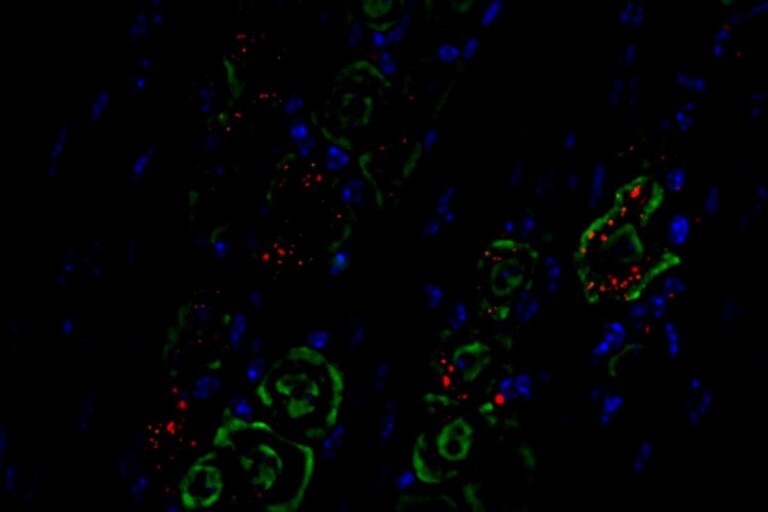
Rather than merely carrying medication, these specially created supramolecular nanoparticles are paving the way as a self-sufficient treatment. They are designed to imitate biomolecules that assist the brain in removing amyloid-beta, the troublesome plaque often linked to Alzheimer’s. Remarkably, in mouse models genetically altered to produce excessive amounts of amyloid-beta, a series of three nanoparticle injections reduced toxic protein levels by over 50% in just one hour, with significant improvements in cognitive abilities observed months afterwards.
Published in the journal Signal Transduction and Targeted Therapy, these findings introduce a fresh perspective on addressing neurodegenerative conditions. This approach doesn’t just attack neurons, but rejuvenates the brain’s innate cleaning mechanisms, which tend to falter as the blood-brain barrier weakens with aging. Though human trials are on the horizon, these promising results suggest that enhancing vascular health in the brain may be critical in halting or even reversing Alzheimer’s.
Understanding How the Nanoparticles Function
The standout aspect of this treatment lies in its focus on sync with the brain’s natural systems instead of opposing them. The teams from IBEC and West China Hospital have crafted supramolecular nanoparticles that imitate the brain’s inherent molecules responsible for clearing toxins, particularly those linked to a receptor known as LRP1. This receptor is crucial for managing what makes its way through the blood-brain barrier, particularly aiding in the expulsion of amyloid-beta—the toxic protein that interferes with communication between neurons.
With time, the efficiency of the blood-brain barrier declines, making it less effective in purging waste and granting increased avenues for amyloid buildup. These innovative nanoparticles work by effectively “training” the blood-brain barrier to resume its prime responsibilities. Upon injection, they attach to amyloid-beta, seamlessly traverse the blood-brain barrier, and encourage the brain’s vascular system to carry the protein out into the bloodstream to be disposed of.
The results of the experiments done on mice were impressive, showing a rapid decrease of 50-60% in amyloid levels within an hour and an increase in cognitive function in older mice over a few months. Unlike antibody therapies that aim directly at amyloid plaques, this approach repairs the brain’s underlying clearance systems, suggesting a safer and possibly more effective long-term solution for neurodegeneration.
Next up, researchers intend to delve into how this strategy could apply to humans. If similar outcomes are achieved in clinical trials, it could signify a massive shift in Alzheimer’s research, indicating that the answer to reversing the disease might lie not within the neurons but within the protective confines of the blood-brain barrier.