


In a grim turnaround for Russia’s missile testing program, the much-publicized ‘Satan II’ intercontinental ballistic missile met a fiery fate shortly after take-off. Launched from the Yasny test site in Orenburg, this nuclear-capable missile had been touted as one of the deadliest weapons globally.
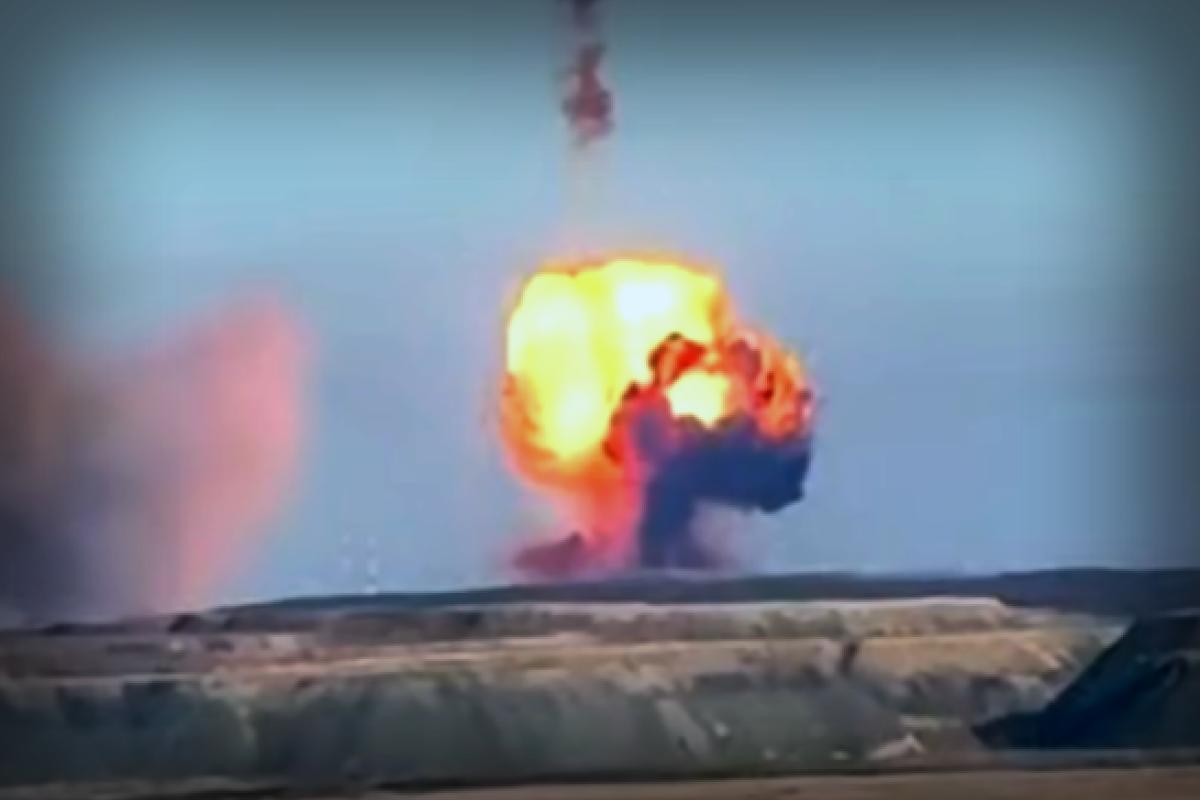
Just moments after liftoff, the Sarmat RS-28 rocket lost control, spewing dense black smoke before making a rapid descent back to Earth. The missile’s catastrophic landing occurred close to the launchpad, creating a massive fireball and a striking purple smoke cloud that could be seen for miles.
This incident isn’t an isolated blunder; during another test attempt last September at the Plesetsk Cosmodrome—500 miles north of Moscow—the same missile detonated spectacularly, gouging a large crater into the launch area. However, despite such setbacks, President Vladimir Putin had voiced optimism earlier, stating plans to conduct combat trials in the near term, with a final rollout expected next year.
Weighing in at over 200 tons and stretching 35 meters in length, the Sarmat is designed for long-range missions, boasting a reach of around 11,200 miles aimed directly at targets in the US and Europe. Notably, Vyacheslav Volodin, a member of the Russian security council, had previously asserted that the missile could strike the European Parliament in Strasbourg in less than four minutes!
Originally scheduled for deployment back in 2018, continual failures in testing have pushed back its operational timeline, with so far only a single test being deemed partly successful. Is it any wonder then that Defense Express, a publication focused on defense issues in Ukraine, indicated that the configurations observed during recent missile footage strongly suggest that it could only be the Satan II, especially given that no satellite launches were on the agenda from the Yasny site.
Pavel Podvig, a specialist in Russian nuclear arsenal at the UN, commented on the situation, declaring that only two missile types could fit the profile: the old SS-18 (also known as Satan I) or the infamous Sarmat missile. He stressed the improbability of it being the older SS-18, which hasn’t left its storage since 2013.
Podvig also mentioned that the testing launch site had moved from Plesetsk to the Dombarovsky air base, right by Yasny, after the former was heavily damaged in 2024. Recent satellite imagery indicated that the latest attempt saw the missile come down about half a mile away from its silo, which resulted in a substantial 70-meter-wide crater.
Echoing sentiments of continuous effort, Podvig remarked, “Russia is likely to persist with missile testing despite the setbacks. They certainly see value in having such heavy missiles to effectively counter Western missile defenses, framing it as both a military necessity and a political message. Even though their military position could likely stand without the Sarmat, the political implications of this program resonate far and wide. So, efforts will undoubtedly continue.”
Many observers remain skeptical. Etienne Marcuz, an associate at the Foundation for Strategic Research in France, pointed out that this incident marked the fifth consecutive failure for what is claimed to be a cornerstone of Russian nuclear capability.
Marcuz concerns about Russia’s reliance on nuclear deterrence to pursue aggressive foreign policies while potentially backing countries that support Russia in conflicts, under the threat of nuclear retaliation. Such a dynamic could affect global tensions significantly.