



- Back in 2015, the Paris Climate Accords set a pretty serious target: keep the global temperature rise below 1.5 degrees Celsius compared to pre-industrial levels. But a new study claims we may have already zoomed past that mark.
- Researchers at the University of Western Australia’s Oceans Institute took a long look at old Caribbean sclerosponges to piece together a timeline of ocean temperatures going back to the 1700s.
- The study suggests we reached that critical 1.5 degrees mark in 2020, though some experts doubt that data from a single region can capture the complex thermal dynamics of our oceans.
No matter where you stand on climate change (let’s face it, it’s real, let’s move past that), you can’t miss the almost constant reminders that we need to “keep the temperature from rising above 1.5 degrees Celsius.” This phrase has become a battle cry for anyone who cares about the future of our planet.
This challenging goal made headlines after the Paris Climate Agreement and warns that if we consistently exceed an average of 1.5 degrees Celsius over an extended period, we could face catastrophic consequences for both humanity and our environment.
A recent paper from the University of Western Australia’s Oceans Institute delivers bad news: it claims the world may have crossed that line four years ago.
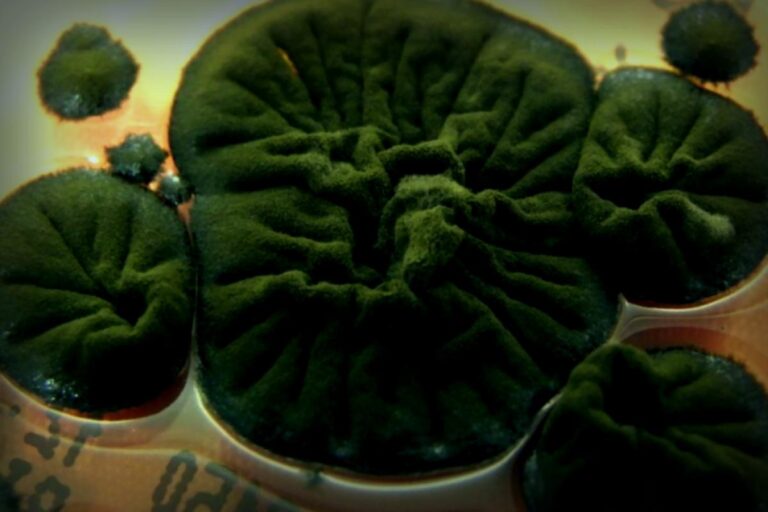
Published in Nature Climate Change, this study’s rather surprising path to this conclusion involves analyzing six sclerosponges. These underwater sponges can live for a long time and latch onto ocean cave walls. They’re popular subjects for climate researchers and are often d “natural archives” since they grow incredibly slowly—just a fraction of a millimeter each year—effectively trapping climate data in their limestone structures, similar to tree rings or ice cores.
By examining strontium to calcium ratios, scientists backtracked ocean temperatures as far as 1700. Plus, since these sponges reside in the Caribbean, major ocean currents don’t muddy the water, so to speak, providing reliable temperature insights. By contrast, human sea temperature measurements only really kicked off around 1850 when sailors began to dip buckets into the ocean. This is why organizations like the Intergovernmental Panel on Climate Change (IPCC) often set their pre-industrial baselines around 1850 or 1900, according to Grist.
Malcolm McCulloch, the lead researcher, shared with the Associated Press, “The overall picture shows that the timeline for reducing emissions to lessen the threat of dangerous climate change has been pushed up by at least ten years. Essentially, we’re running out of time.”
The findings suggest that the planet began warming about 80 years earlier than what the IPCC predicted, and that we already busting through at 1.7 degrees Celsius in 2020. That’s a significant “whoa” moment if it’s true, but not everyone is convinced. A scientist, speaking with LiveScience, argued that it feels dubious to challenge instrumental records based just on sclerosponges from one area of the world, saying it “doesn’t fully add up.” Others want to see additional data before overturning the IPCC’s current climate norms, which place the global temperature rise at around 1.2 degrees Celsius.
But here’s the kicker: even if the sponges turn out to be inaccurate, there’s still a lot of growing evidence that we are possibly achieving that 1.5 degree line as we speak. For instance, January of this year was recorded as the hottest on file, registering a temperature increase of 1.7 degrees over pre-industrial levels. New Scientist reported that means we’ve been above the 1.5 degrees mark for at least a year. While that doesn’t break our long-term average, it certainly indicates we’re speeding towards a very close encounter.
Regardless of the exact figures, there’s a clear takeaway: climate change is a pressing crisis that calls for immediate action from everyone. If we want to ensure the planet remains inhabitable for future generations, we must drastically reduce emissions right away—let those sea sponges inspire change.