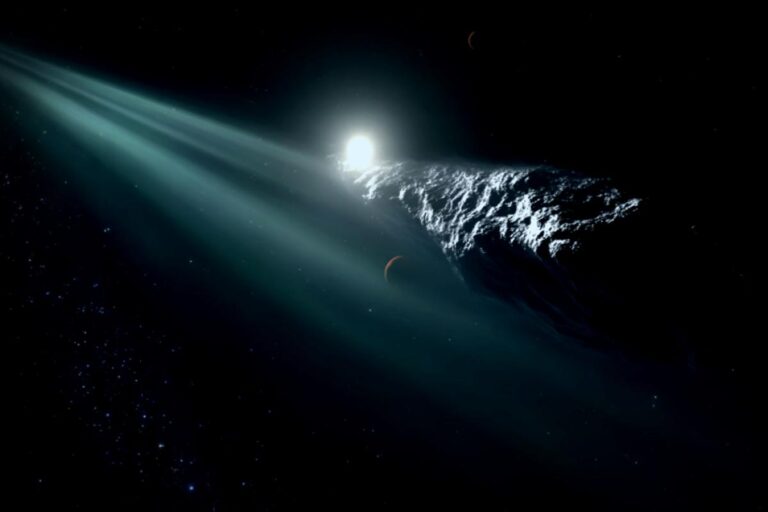



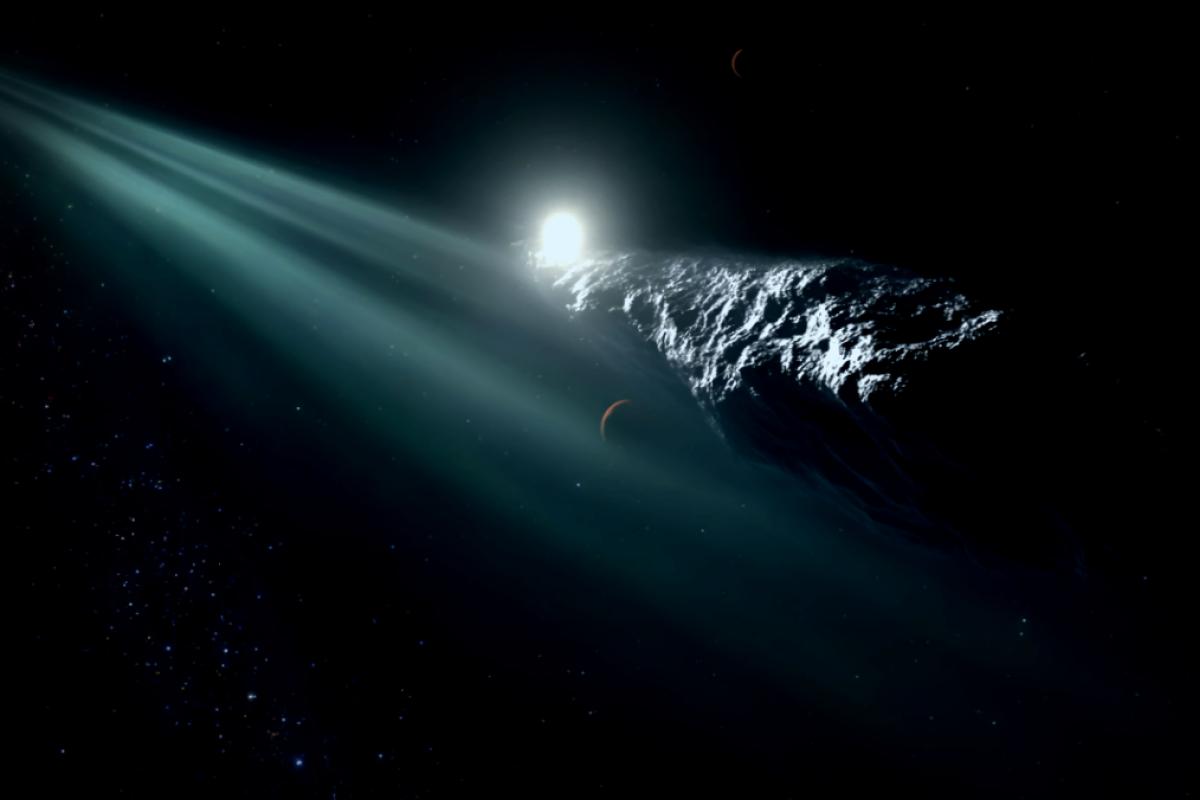
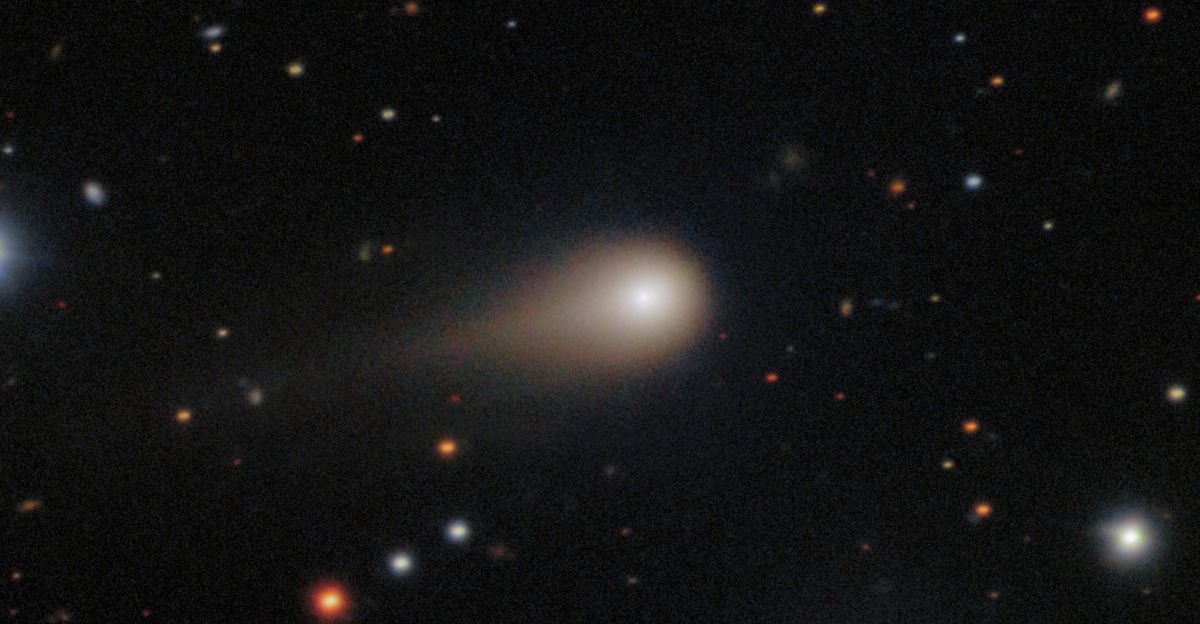
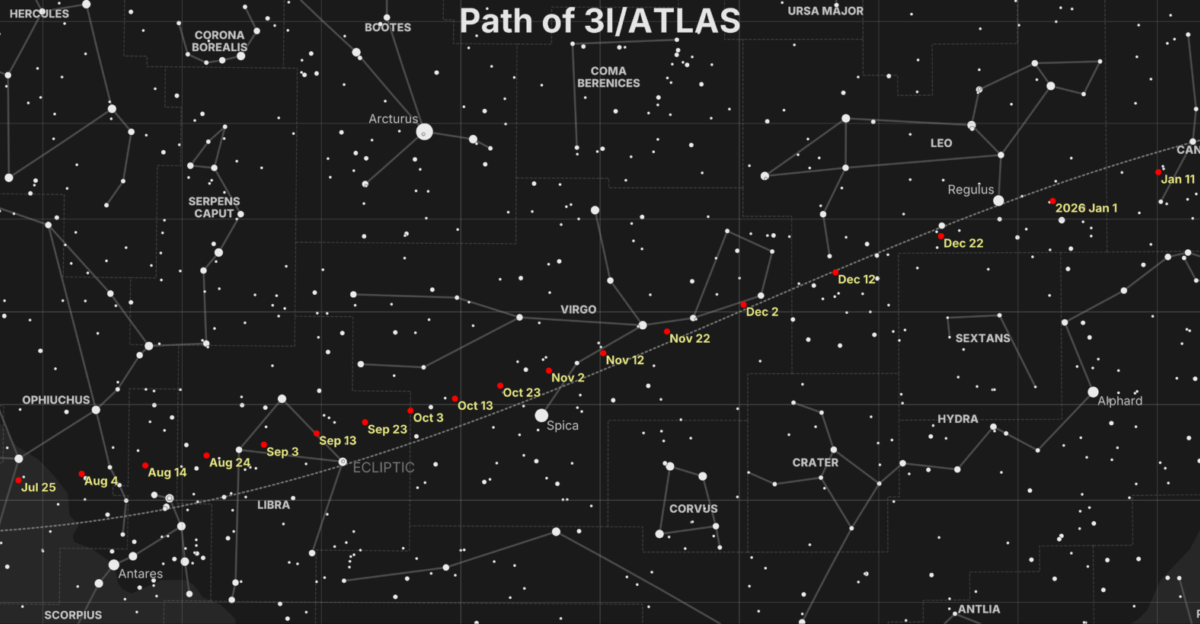
Meet 3I/ATLAS, a comet breaking records as only the third known object to hail from another star system! At around 5.6 kilometers wide, this ice-filled wonder is speeding towards the Sun on a one-way road trip, packing frozen gases that originate from environments we’ve never seen before. It wasn’t until scientists spotted it in July 2025, when it was a whopping 670 million kilometers from Earth, that we began unraveling its mysteries.
Before 3I/ATLAS, we’d only come across ‘Oumuamua in 2017, famously shaped like a cigar, and 2I/Borisov, which rolled into view in 2019 with behavior typical of our home comets. Now, with 3I/ATLAS sitting proudly among them, researchers have a new way to dig into the building blocks of planets formed light-years away. Each of these wandering visitors feeds our understanding of cosmic materials.
Thanks to ALMA: Peeking Into 3I/ATLAS’ Secrets
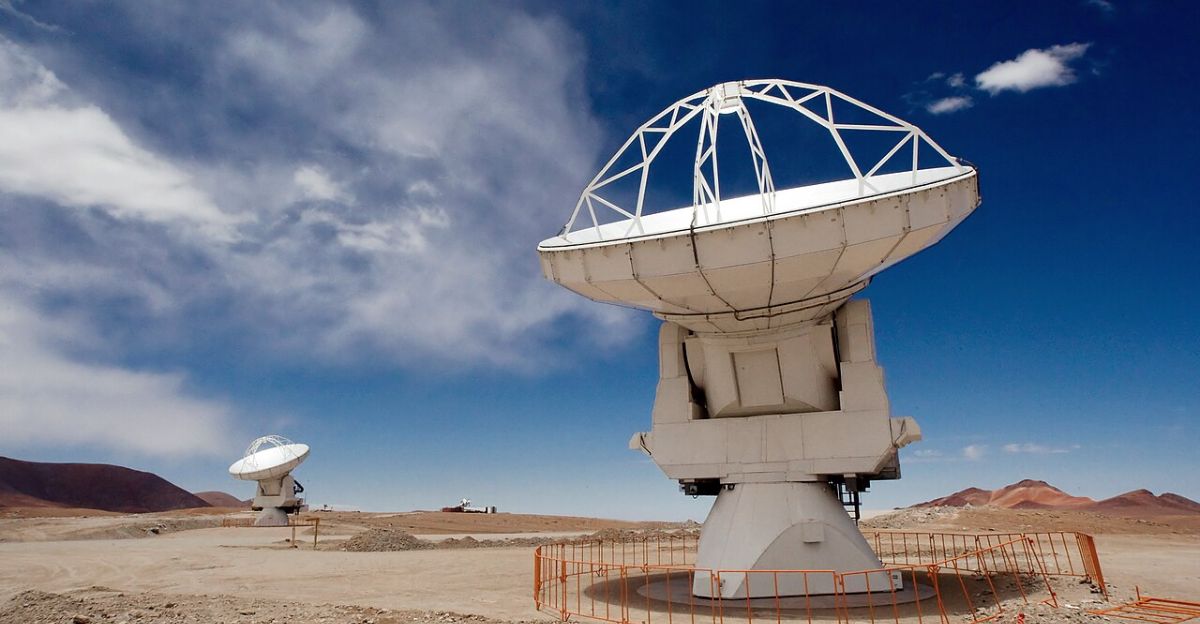
The real breakthrough in deciphering the enigma of 3I/ATLAS came courtesy of the Atacama Large Millimeter/submillimeter Array (ALMA) located high up in the Atacama Desert in Chile. Set at over 5,000 meters above sea level, ALMA boasts 66 radio antennas acting as a super-sensitive telescope, tuning into invisible radio waves rather than visible light. This remarkable tool allows astronomers to detect faint signals deep within cosmic gas and dust, essential for studying chemical makeup in comets far from the Sun.
From August to October 2025, scientists were eager to grab insights from 3I/ATLAS before it sped out of range. With ALMA as their trusty sidekick, they measured the comet’s gas output multiple times, tackling two significant chemicals: methanol and hydrogen cyanide. Insights rolled in showing impressive quantities of these compounds—way beyond what we’ve seen from any known comets!
Revolutionary Chemical Discoveries
The outcomes took scientists by surprise! ALMA revealed record levels of methanol, a simple alcohol that typically shows up in comets but not in such significant amounts. On two days, September 12 and 15, 2025, the readings indicated much higher methanol levels than those found in most solar system comets, with only one other comet, C/2016 R2, exceeding these figures, making 3I/ATLAS the second richest in methanol ever recorded.
Additionally, strident signals of hydrogen cyanide poured in, a key ingredient in forming amino acids—essentially the bread and butter of life. Remarkably, the relationship between methanol and hydrogen cyanide leaned heavily towards the latter, with a ratio reaching 124 to 1 at some points. That’s massively different from what we normally encounter in comets from our solar family! This suggests that 3I/ATLAS holds an uncommon mix of chemicals, offering unique insights about the environment of its birth—a genuine time capsule!
Understanding the Cosmos Through 3I/ATLAS
The rich chemical baggage in 3I/ATLAS provides a window into the distant space where it took shape. The high quantity of organic molecules hints it started its journey in a distant, cold cradle of another solar system—an area where ices and gasses mingled to create complex formations. Maybe that environment was even chillier and abundant in different elements than what we see in the frigid outer parts of our own solar system.
As the comet journeyed closer to the Sun, something intriguing happened: its methanol production skyrocketed! This surge surfaced within the sublimation zone, where heat from the Sun smacks into ice, transforming it from solid to gas. This dynamic shift aids researchers in comprehending how solar energy influences ices as they heat. Spotting these changes during a flyby grants scientists precious insights into how comets change and effuse gases under this cosmic spotlight.
These exciting finds flip previous concepts about comets on their head. Most comet theories arose only from solar system specimens. However, thanks to 3I/ATLAS, it’s clear that interstellar comets might possess chemical features far more complex than we previously believed. This emphasizes the idea that comets rich in volatile compounds likely circulate around many other stars. As scientists refine technology, more interstellar comets will offer precious glances into how planetary systems create and distribute materials across the galaxy.
While it’s sad to see 3I/ATLAS drift off back into the cosmos for good, the data it generously provided will be the roadmap for innovative discoveries for years to come. With exciting new telescopes in progress and enhanced observational techniques in play, the next interstellar visitor may tantalize us with even deeper secrets about matter’s cosmic lifecycle and evolution.
Sources: