



Recently, President Donald Trump made headlines by signing an executive order that designates fentanyl as a weapon of mass destruction. This bold move followed a controversial diatribe delivered in the Oval Office.
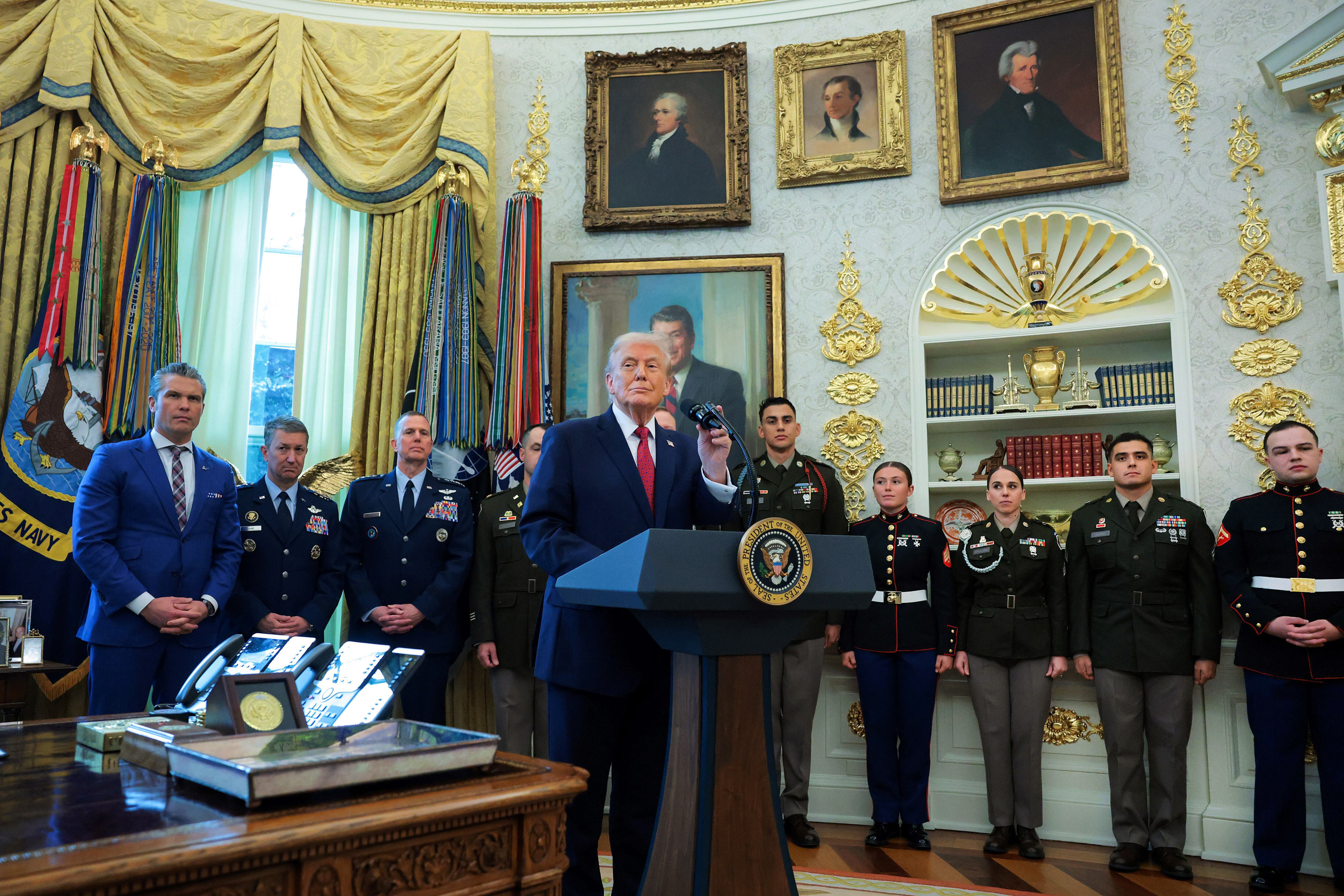
During the same announcement, the 79-year-old president shared plans for a ceremony honoring military personnel with the Mexican Border Defense Medal for their efforts along the U.S.-Mexico border.
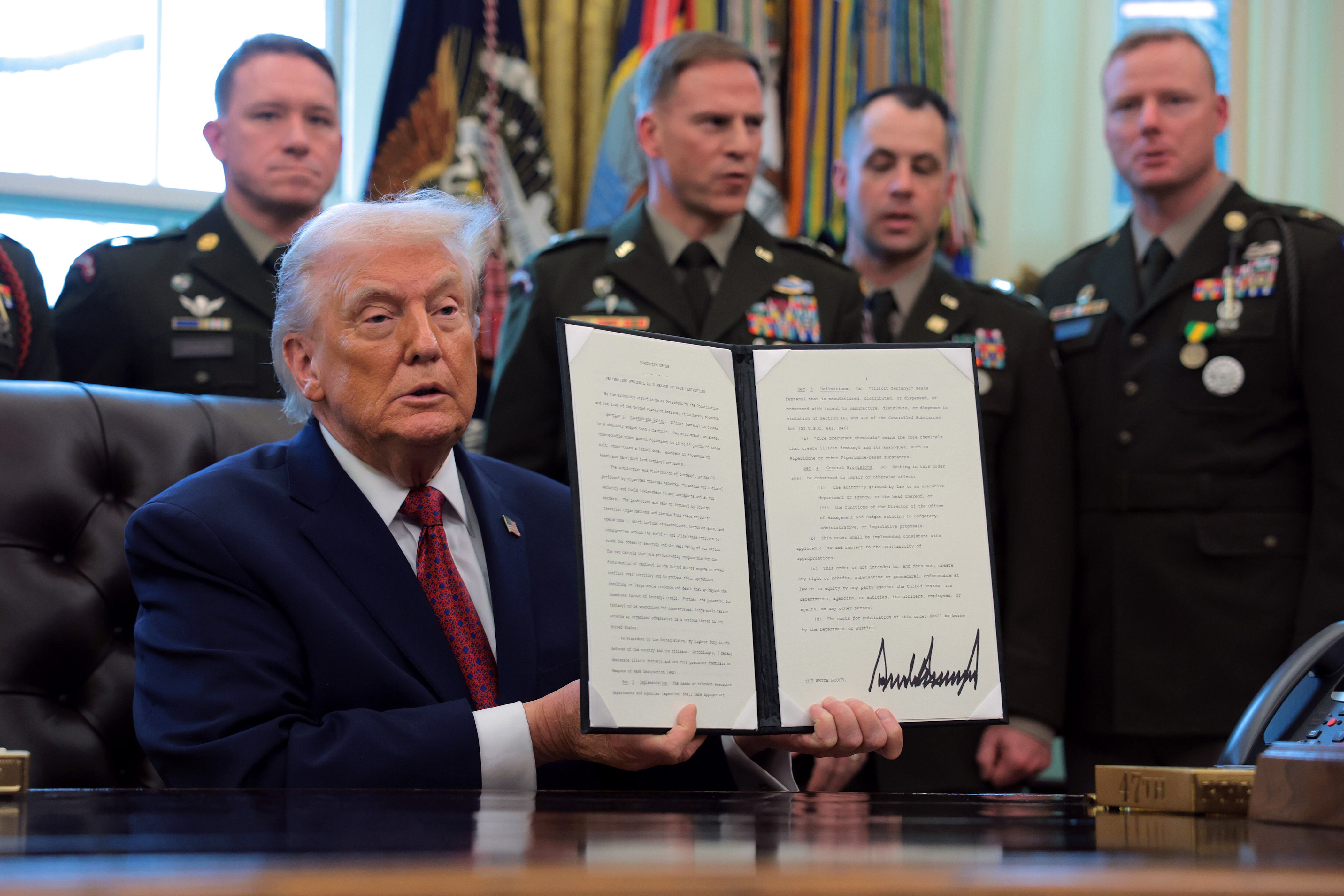
Trump emphasized that the impact of fentanyl far exceeds that of traditional explosives, stating, “No bomb is causing the damage fentanyl is to our people.” He expressed deep concerns stating, “America’s adversaries are smuggling fentanyl in part to harm our citizens. If we treated this as a war, it would be one of the most lethal in history.”
He claimed that the death toll from fentanyl could reach up to 300,000 annually. However, recent statistics from the Centers for Disease Control and Prevention reported that related fatalities were actually down to just over 72,000 in 2023 and continue decreasing.
Trump noted, “Families have been shattered by this crisis. Losing a child or having one struggle with addiction can irreparably alter a family dynamic.”
The executive order instructs various federal agencies to work towards mitigating the threat posed by illicit fentanyl and its precursor chemicals within the U.S.
Traditionally, the term “weapons of mass destruction” includes nuclear, chemical, and biological arms, known for their potential to cause extensive destruction and death. This term famously underpinned the rationale for the 2003 invasion of Iraq, which failed to uncover any WMDs.
China has been singled out as the main source of fentanyl entering the United States. Trump asserted coordination with the Chinese government on addressing this, before he made the definitive conclusion to classify it as a weapon of mass destruction.
This classification echoes calls from some lawmakers on Capitol Hill.
During his address, Trump added nuance to the discussion, acknowledging the dual nature of fentanyl. He mentioned its usefulness in healthcare while asserting that its illicit combination with harmful substances is dangerous.
The announcement followed a divisive outburst where Trump criticized Democrats, claiming they misrepresent the immigrant population, stating, “These immigrants make our own citizens look like children.” He also described migrants crossing the border as amongst the most violent criminals worldwide.
Additionally, he repeated unfounded claims that various countries released their prisoners and mental health patients into the U.S. Trump emphasized prior military operations against drug transporters in the Caribbean and mentioned the potential for ground assaults in the future.
So far, the administration has not provided conclusive proof that at least 22 attacks on alleged drug vessels, which resulted in over 80 deaths, were indeed linked to drug smuggling.