


Image courtesy of Ocean Alliance
Drones in Whale Research: Changing the Game for Marine Biologists
Back in 2010, a major oil spill from the Deepwater Horizon rig created chaos in the Gulf of Mexico. Whale expert Iain Kerr headed out to investigate how this spill impacted sperm whales, resorting to shooting specialized darts to collect tiny tissue samples. However, it wasn’t going smoothly at all.
Every time he would get close to a whale surfacing for air, it would dive right back under. “It was like I was playing Whac-A-Mole,” Kerr quipped.
One evening, Kerr got an idea after a rather unusual encounter with a whale—it splashed him with its blow. This led him to wonder: couldn’t he collect that whale snot by flying above the creature? Whale snot can offer vital insights, such as DNA information, identifying the whale’s sex, its pregnancy status, and even microbiome details.
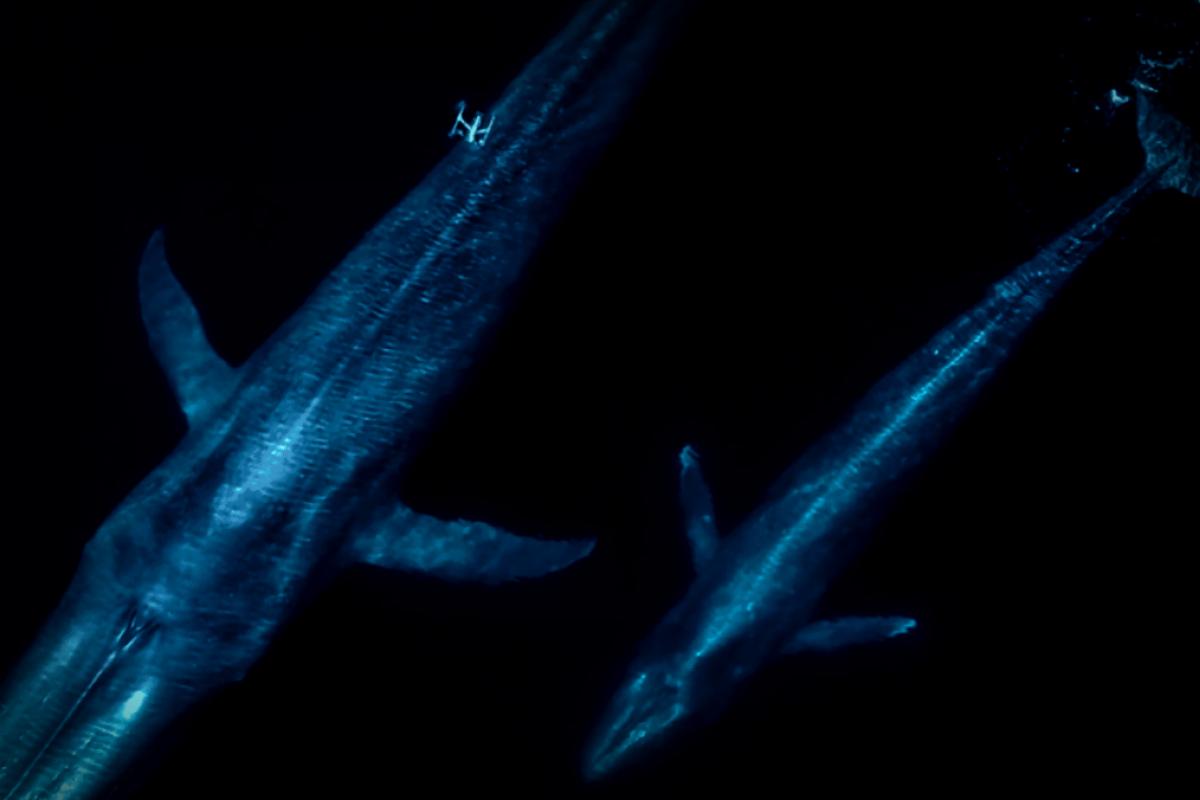
After several trials, Kerr developed the SnotBot, a drone equipped with six petri dishes designed to capture the expelled snot as a whale comes to the surface. Today, similar drones are used worldwide, collecting this precious mucus not only from sperm whales but from species like blue whales and dolphins as well. As Kerr notes, “Drones have changed my life.”
More Than Just Mucus
The ability to gather snot is just one way drones contribute to whale studies. Over the past decade, drone tech has greatly improved, becoming more user-friendly and accessible. This has been a game-changer for researchers. “Drones are now being utilized in nearly every aspect of marine mammal research,” says Joshua Stewart, an ecologist at the Marine Mammal Institute at Oregon State University.
One of the big benefits of using drones is that scientists don’t need to get up close to whales with a boat, which means less disturbance for the animals. It also keeps the researchers safer since being on a boat near a giant whale can be pretty risky. Drones outshine planes too; they’re cheaper, easier to handle, and only require one or two people to operate, unlike the many needed to run an aircraft, according to Stewart.
drones offer a fresh perspective, allowing scientists to observe whales in ways they couldn’t before. As marine conservation ecologist David Johnston points out, the limited view from a boat doesn’t provide ample information. Meanwhile, the vantage point from a drone supercharges research opportunities, enabling observations on whale size, health, and even identification based on unique features.
While most drone research avoids close encounters, some scientists are utilizing these devices to drop tags that track dolphin movement and behavior. Without drones, doing this would involve boats and traditional equipment, but with a drone, a tag can be released from above directly onto the whale’s back through a suction cup.
Thanks to drones, researchers are uncovering surprising behaviors. Kerr shared that he has seen far more intriguing activities in the last five to eight years than in the previous thirty. For instance, in 2025, it was documented that killer whales used kelp to groom themselves and each other, a discovery made possible by hours of drone footage near Washington state.
This behavior, which is a sign of tool use among whales, would have likely gone unnoticed without drones providing that essential bird’s-eye perspective, says behavioral ecologist Michael Weiss.
Even though drones have unleashed so much potential in whale research, there’s still room for improvement. Many drones have short flight times, often maxing out at about 45 minutes an hour. Moreover, regulations surrounding drone operations can limit how far they can fly. For instance, U.S. regulations require operators to keep drones in sight unless they obtain additional permits.
Kerr and his colleagues are exploring even further applications of drones, including efforts to rescue entangled whales. They are working on developing a 3D-printed metal hook that can be dropped onto fishing nets to assist a whale in untangling itself as it moves.
As drone technology rapidly evolves, the future of marine mammal research seems wide open, with infinite possibilities waiting to be discovered, according to Stewart. “It’s tough to speculate about what’s next.”
This story was produced by Knowable Magazineand reviewed and distributed by Stacker.