


On December 19, the U.S. military carried out air raids targeting various Islamic State (ISIS) positions in Syria. This action follows the tragic death of two U.S. Army soldiers and a civilian interpreter just last week.
Defense Secretary Pete Hegseth labeled the operations as a “declaration of vengeance” and assured that the U.S. would not falter in its commitment to protect its citizens under President Trump’s leadership, in a recent post on social media.
The airstrikes were aimed at “ISIS fighters, weapon sites, and critical infrastructure,” Hegseth confirmed, which he stated was a direct consequence of the attack leading to the loss of Sgt. William Nathaniel Howard, 29, Sgt. Edgar Brian Torres-Tovar, 25, and U.S. civilian interpreter Ayad Sakat on December 13 in Palmyra, Syria.
This retaliation was underscored by President Trump, who promised a “serious response” after the reported killings by a lone shooter targeting a convoy of American and Syrian forces. The troops were involved in Operation Inherent Resolve, the U.S. initiative designed to combat the ISIS threat.
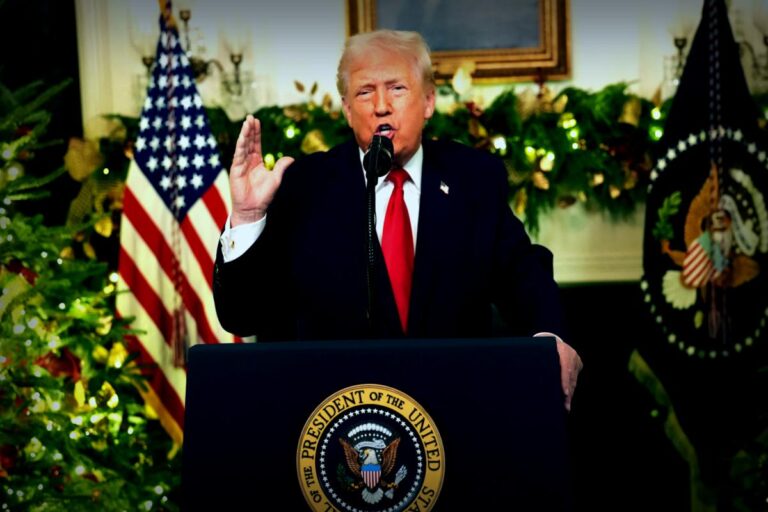
“As I promised,” Trump announced on Truth Social, “The bravery of our fallen Americans, whose dignified return occurred earlier this week, deserves serious vengeance against ISIS for their brutal actions.”
The recent airstrikes led to strikes on over 70 designated targets across central Syria, utilizing a range of military assets including fighter jets, helicopters, and artillery fire, as detailed in a Central Command statement.
Since the attack on December 13, U.S. and Syrian forces have been active with 10 operations in the region, resulting in the capture or elimination of 23 alleged terrorist operatives. In total, there have been about 80 operations targeting terrorist threats in Syria over the past six months, aimed at neutralizing such elements in the region.
Trump Expresses Support for New Syrian Leadership
In his social media post, Trump conveyed his ongoing backing for the new Syrian leader, Ahmed al-Sharaa. Al-Sharaa, once involved with al-Qaeda, has risen to power amidst the political upheaval in the Syrian government now led by a potential successor to tyrant Bashar al-Assad.
“Our strikes against ISIS are needed in a conflict-laden area hoping for a better future post-ISIS,” said Trump, expressing confidence in al-Sharaa’s role. He issued a stern warning to any terrorists hostile to the U.S.
After meeting with al-Sharaa on May 13 in Saudi Arabia, Trump discussed plans to ease sanctions to foster recovery efforts in Syria following the civil war.
Trump stated, “He’s got potential – he’s a genuine leader,” describing al-Sharaa as a competent individual. “He can indeed help stabilize Syria.”
Highlighted Casualties in Syria
Sgt. Howard, Sgt. Torres-Tovar, and civilian Ayad Sakat were fatally shot in Palmyra, an area central to the ongoing military operation against ISIS. Reports indicate the shooter targeted their convoy before being eliminated by U.S. forces.
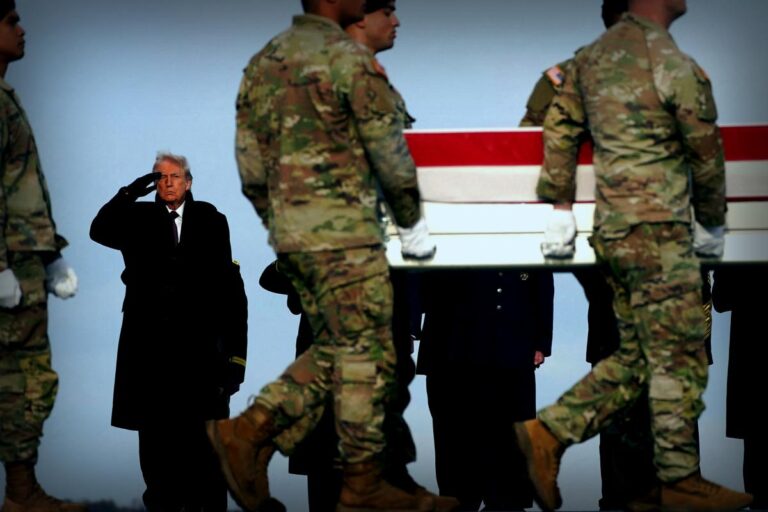
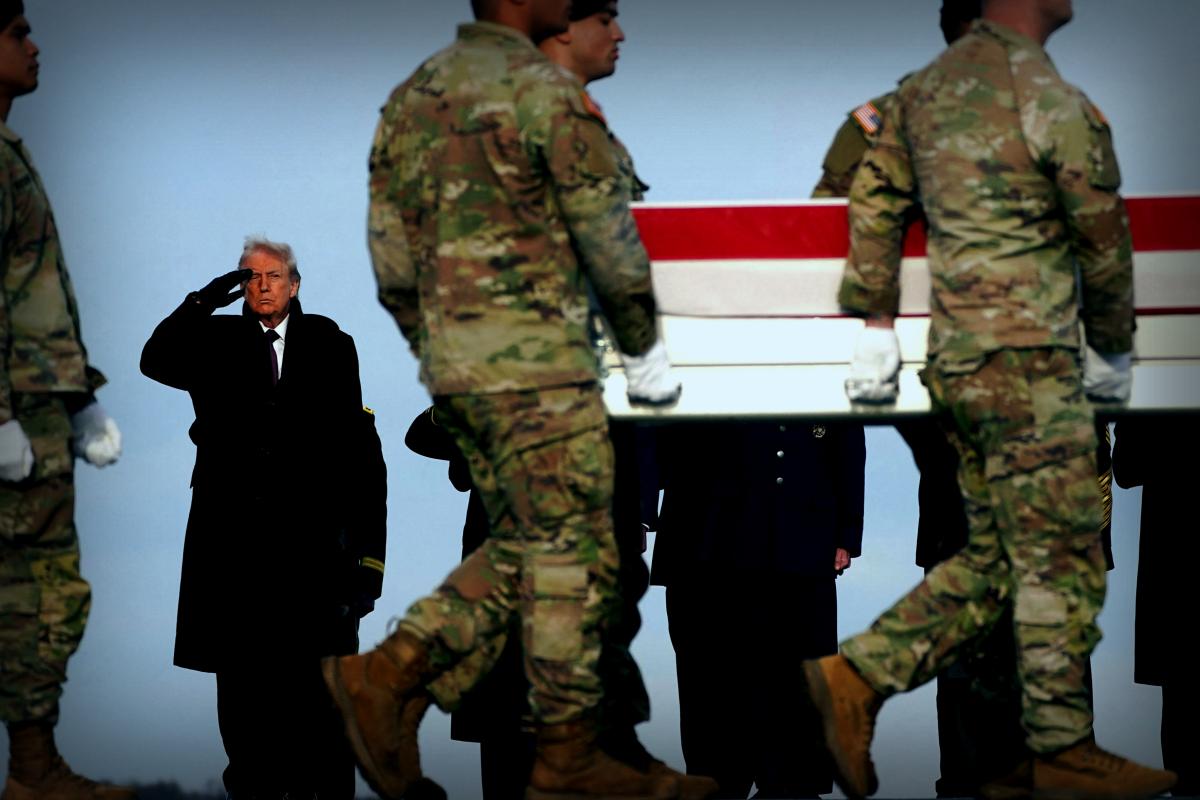
The Syrian government disclosed the attacker had connections to its security forces and was suspected of ISIS affiliations. On December 17, Trump, alongside military leaders, participated in a solemn ceremony at Dover Air Force Base as the fallen were returned to U.S. soil.
This incident occurred shortly after Syria committed to collaborate politically with the U.S.-led fight against ISIS, marked by al-Sharaa’s visit to the White House.
Trump labeled al-Sharaa as “extremely disturbed” over the attack against American troops.
The Resurrgence of ISIS: Is it Coming Back?
ISIS proclaimed itself a caliphate in 2014, quickly expanding not amidst peace, but through chaos in Syria and Iraq, controlling an area comparable to the size of England and inhabited by nearly 12 million people.
Their tyrannical rule under the self-anointed caliph Abu Bakr Al-Baghdadi was marked by notorious mass atrocities and the displacement of millions.
Despite its territorial losses by the end of 2017, culminating with the fall of its final stronghold in March 2019, ISIS has evolved into an underground insurgency while still remaining a threat to regional stability.
Recent reports indicate ISIS has stepped up its activities, claiming 153 attacks in the first half of 2024, and according to Central Command’s briefings, the group might increase its campaigns significantly compared to the preceding year. “We will always pursue those attempting to harm Americans and our allies,” asserted Adm. Brad Cooper following the December 19 strikes.
Reported by Bart Jansen, USA TODAY; Reuters
This article originally appeared on USA TODAY: Pentagon’s Vengeful Strikes Against ISIS in Syria