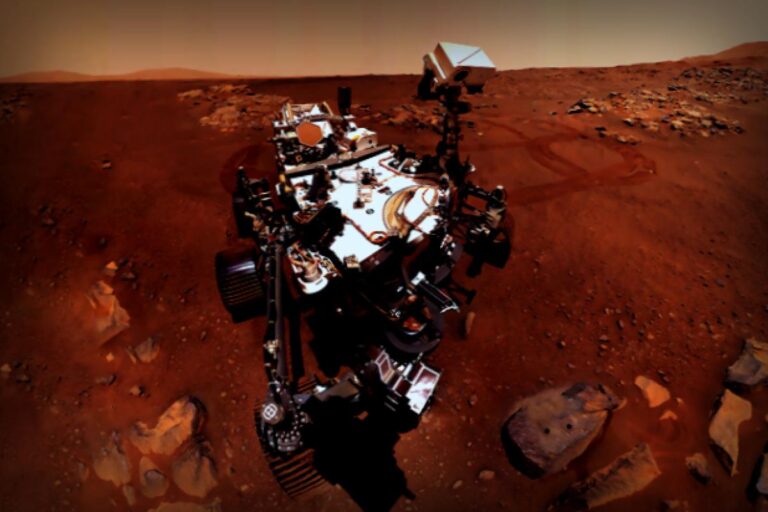


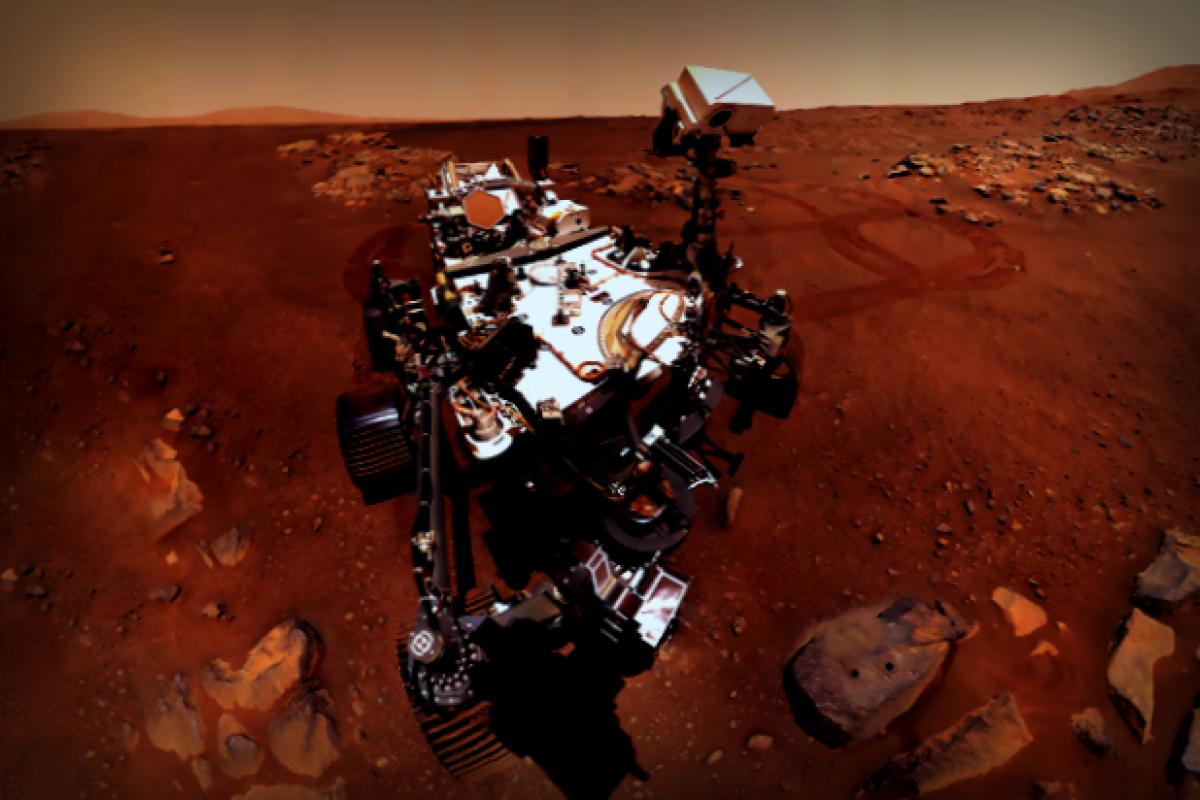
You know, sometimes the biggest breakthroughs in science come completely out of the blue. Last year, NASA’s Curiosity Mars rover made one of those lucky finds when it accidentally cracked open a rock while cruising around Mars. On May 30, 2024, the rover’s impressive weight of 1,982 pounds caused a rock to crumble, and inside it was a surprise: a bunch of yellowish-green crystals made of pure sulfur! While they might not be the prettiest souvenirs from Mars, researchers are over the moon about this discovery.
This is the very first instance where pure elemental sulfur has been spotted on the Martian surface. Before this, we’ve only discovered sulfur in sulfates—compounds that form when sulfur mingles with other minerals in water and gets dried out. Finding sulfates was pretty exciting as it provided us with more evidence of Mars’ watery past. However, this recent pure sulfur discovery hints that Mars may have more similarities with Earth than we ever really thought.
On Earth, we usually find sulfur in the form of sulfates, too. But pure sulfur crystals come to life through volcanic and hydrothermal processes here, which leads scientists to think these crystals found on Mars could give insight into the planet’s geological history and possibly why the volcanic activity there seems to have gone quiet. NASA is diving into the data Curiosity collected, determined to uncover where these sulfur crystals came from.
Where Curiosity Found the Sulfur on Mars
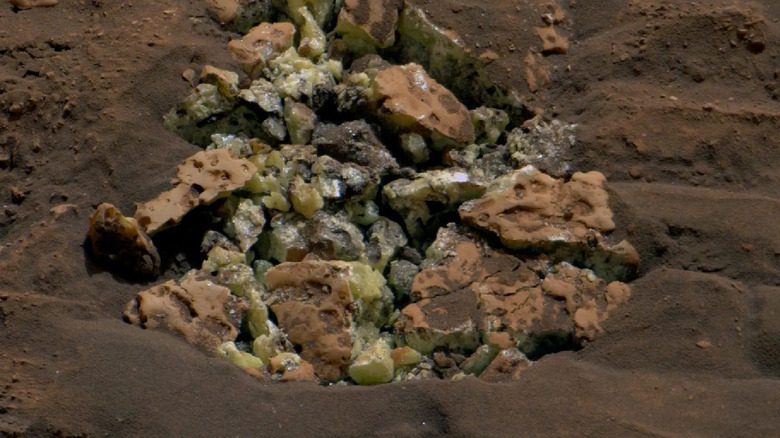
Curiosity stumbled upon this sulfur-packed rock while investigating a region known as the Gediz Vallis channel, which is basically a long scrape on Mount Sharp’s slope on Mars. Speaking of Mount Sharp, it’s quite the sight, towering 3.4 miles into Martian skies right in Gale Crater—exactly where Curiosity landed over a decade ago. NASA chose this landing spot because the mountain is rich in geological features vital for piecing together Mars’ history. With clear layers similar to sedimentary rocks on Earth, each layer tells a story from a different era in Martian time.
Curiosity can’t quite make it to the top of Mount Sharp due to its height and steepness. That’s where the Gediz Vallis channel shows its worth. This channel is filled with rocks that have rolled down from higher up, and thanks to its easy accessibility for Curiosity, the rover can study these specimens without a steep climb. Among those rocks, Curiosity discovered those pure sulfur crystals. Since the rock rolled down from above, scientists still aren’t sure where exactly it fits in Mars’ historical timeline, which only adds to the mystery.
What This Discovery Means for Life on Mars
Every new find on Mars circles back to the ultimate question: Did life ever exist here, or could it still be lurking? That’s precisely what Curiosity was sent to explore, and this sulfur discovery has added another piece to the puzzle, showing that Mars may once have had all the right ingredients for life. The presence of the Gediz Vallis channel, believed to be carved by ancient water flows, speaks volumes about the planet’s wet history. And both sulfates and pure sulfur are critical clues since sulfur is just as important for life as water.
Sulfur molecules play an essential role in life as we understand it—they’re foundational building blocks of proteins and involved in crucial biological processes, like cell signaling and defense against free radicals. Sulfur can be found in every examined lifeform, even the tiniest spores, and it’s quite abundant in humans too. It’s no wonder NASA is keen on studying the implications of sulfur for extraterrestrial life. But to really get to the heart of this new discovery, scientists need to gather more data on how these sulfur crystals came into being. Luckily, the Gediz Vallis channel is full of similar-looking rocks waiting to be analyzed, which means Curiosity’s adventure is just heating up.