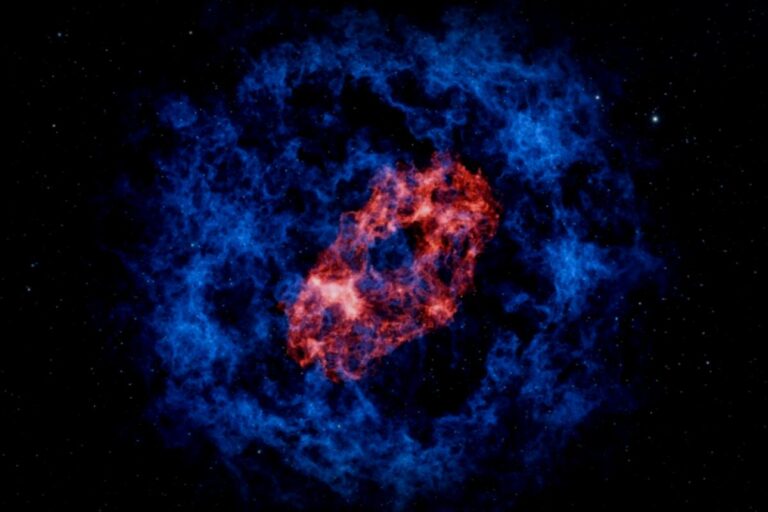


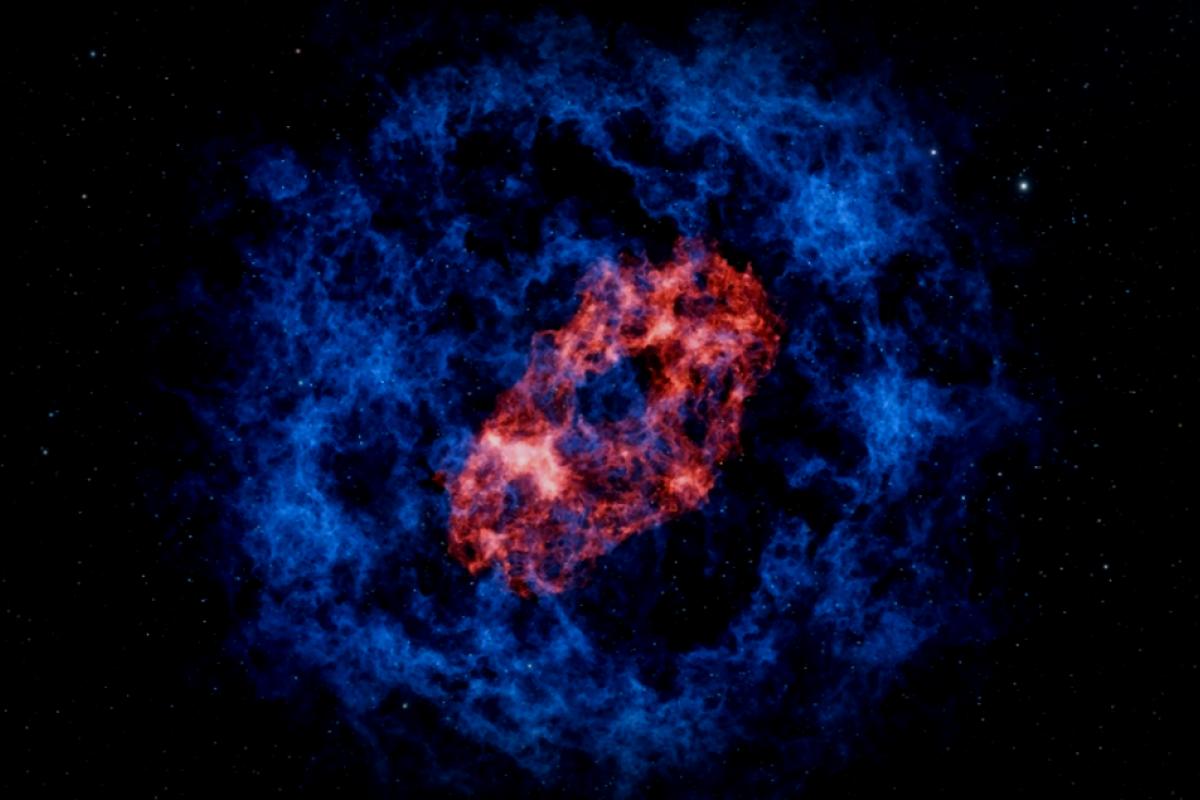
A research team from Caltech is buzzing with excitement over a potential discovery they believe could be the very first superkilonova!
Think of a superkilonova as a cosmic spectacle where a star stages two explosive acts in radically different ways. The team dove into their analysis after picking up gravitational waves detected earlier this year, which may have hinted at what could be the first known instance where a supernova was directly connected to a kilonova.
What is a Supernova, Anyway?
Supernovas are intense explosions marking the end of rapidly spinning stars that are way more massive than our Sun. When these giants run out of fuel, they collapse and explode—often leaving behind a neutron star. It’s a spectacular show!
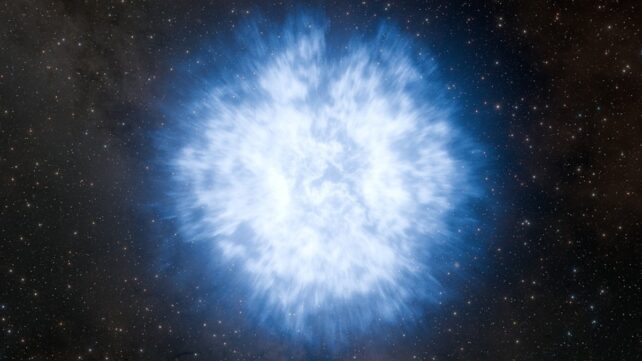
Creating a kilonova is a whole new deal; these events occur when two neutron stars spiral into each other in a mesmerizing orbital dance. As they smash together, they send out gravitational waves that ripple through spacetime—think of it as ringing a cosmic bell!
On August 18, 2025, when the gravitational waves were picked up by the LIGO-Virgo-KAGRA collaboration, astronomers jumped into action, scouring the cosmos for the source. Within hours, they located a fascinating and rapidly fading object located 1.3 billion light-years away.
This sensational phenomenon — d AT2025ulz — resembled the previously confirmed kilonova incident, GW170817, from 2017. That event was groundbreaking, as it allowed scientists to uncover the origin of gravitational waves.
During the initial observations, the remnants at AT2025ulz appeared to glow with the creation of heavy elements like gold. But, intriguingly, after a few days, this red glow dimmed only for AT2025ulz to once again increase in brightness, this time showing hydrogen signatures typical of a supernova!
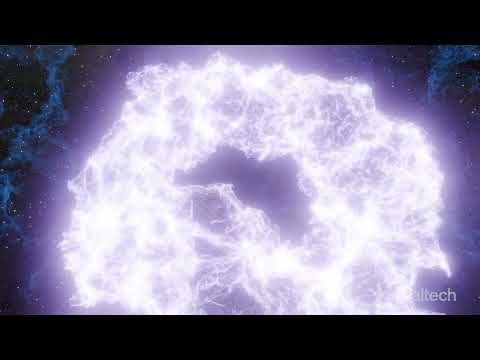
This had researchers scratching their heads—was it a supernova, a kilonova, or possibly both? The scientists propose that this unique blast could indeed be characterized as both.
Previous studies have suggested that, in rare occurrences, a supernova could produce two neutron stars instead of one. If these stars were to collide shortly after, they might just trigger a gravitational wave like those seen in kilonovas.
In typical scenarios, these stellar mergers manifest in open stretches of space, allowing astronomers a clear view of the results.
Brian Metzger, co-author of the study and an astronomer associated with Columbia University, shared with ScienceAlert that in this case, the merger happened “within the exploding star itself, meaning any signal from the kilonova got overshadowed by the enormous mass ejected from the explosion.”
Another exciting twist to this tale was that one of the colliding objects was unexpectedly smaller than a standard neutron star. David Reitze, a laser physicist at LIGO and co-author on this study, says that finding something like this is quite unusual.
The limits of these cosmic neutron stars usually range from about 2.2 to around three solar masses, but intriguingly, some could be as light as 0.1 solar masses.
Still, we’re only scratching the surface of understanding how neutron stars below typical mass emerge from supernova explosions. They may form through fission, where a star splits into two as it goes supernova or through a method known as fragmentation.
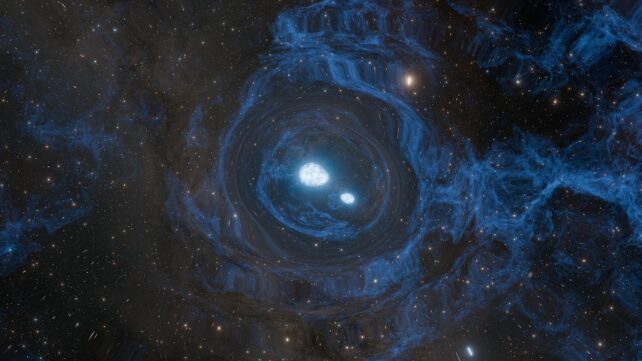
In the fragmentation scenario, a massive star collapsing forms a swirling disk of gas that splits under gravity into smaller pieces. These chunks then rapidly morph into low-mass neutron stars.
Think of the similarities to how planets form around young stars—we’re observing cosmic processes at work!
This experience emphasizes how the universe loves to keep us on our toes with its complex, baffling wonders! And it underscores that such riveting phenomena may require diving into multiple interpretations as we analyze the data.
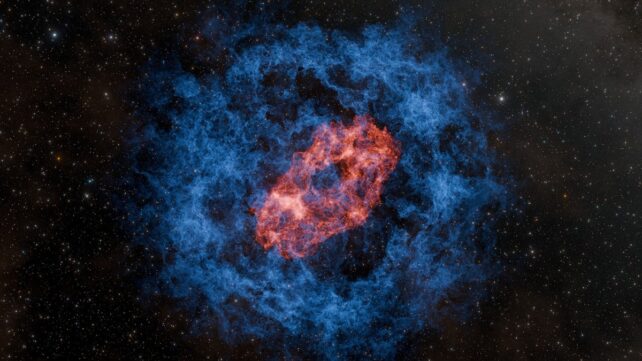
Further studies are essential to validate the idea of a superkilonova alongside similar occurrences in the cosmos.
As Mansi Kasliwal, the lead author and astronomer from Caltech, puts it: “Future kilonova events may masquerade as supernovae, presenting challenges for accurate detection and understanding.”
This exciting research just hit shelves in The Astrophysical Journal Letters.