

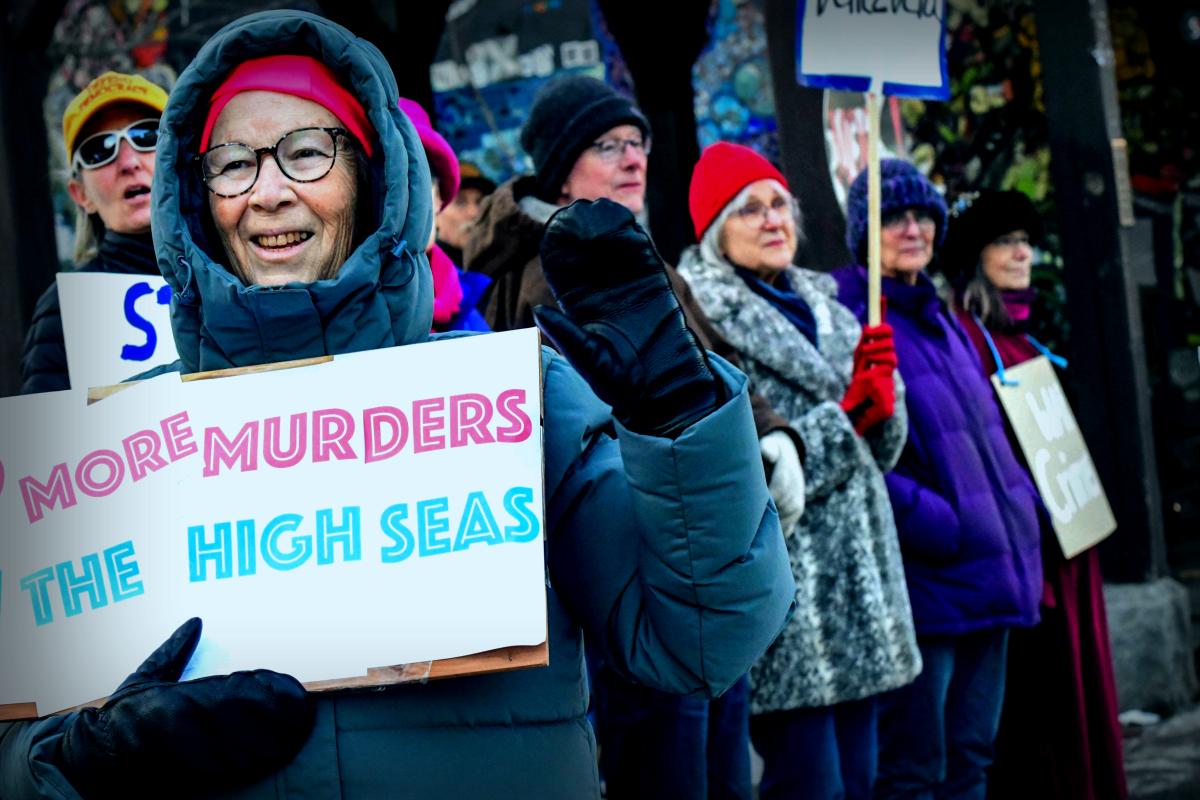
A coalition of civil rights groups took a stand on Tuesday, filing a lawsuit against the Trump administration aimed at exposing the legal memorandum that underpins the recent U.S. military strikes on boats suspected of drug trafficking coming from Latin America.
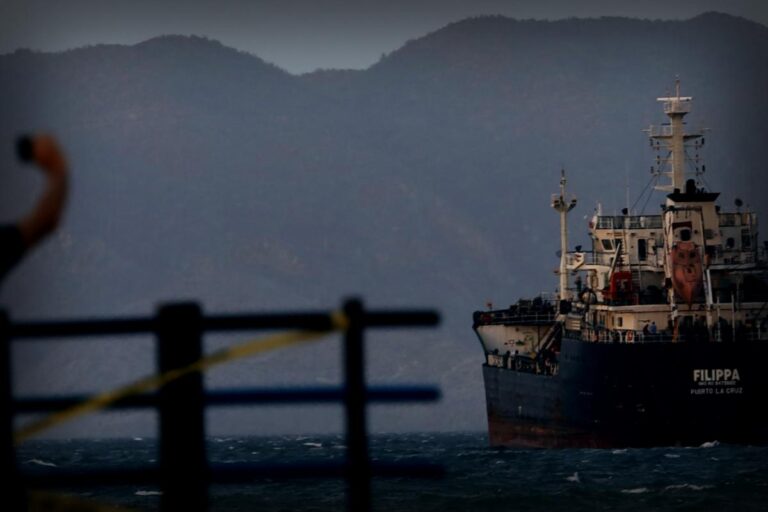
According to the lawsuit, launched in the Southern District of New York, over twenty strikes have been conducted since September, which are claimed to be illegal—resulting in the deaths of at least 87 individuals.
As Jeffrey Stein, an attorney with the American Civil Liberties Union, raised a valid concern, “The public must know how our government rationalizes cold-blooded killings of civilians, and why they think it’s okay to grant immunity to those committing these acts.” You can read his full statement here.
The collaboration between the ACLU, the New York Civil Liberties Union, and the Center for Constitutional Rights requested a freedom of information release of pertinent documents, including a legal opinion from the White House’s Office of Legal Counsel on October 15. A report by The Washington Post highlighted that this memo declared the U.S. is engaged in a “non-international armed conflict” with unnamed “drug cartels.”
However, the complaint states that response records from relevant federal agencies have yet to be made public.
Last month, The Washington Post reported that this classified opinion, drafted during the summer, offers assurances that troops involved in strikes against alleged drug trafficking boats won’t face prosecution in the future.
While the White House representatives and State Department did not respond to requests for comments about the lawsuit, spokespeople for the Justice Department and Pentagon also opted not to engage.
Groups behind the lawsuit state unequivocally that the U.S. is not, and cannot be, engaged in an armed conflict with Latin American drug cartels, countering the assertions from the Trump administration. They caution that under international law, for a situation to be categorized as armed conflict, non-state actors must be organized like military groups and involved in sustained violence against a state.
They reasoned, “No drug cartel can reasonably be argued to meet this standard in relation to the United States.”
Baher Azmy, legal director at the Center for Constitutional Rights, criticized that “The Trump administration is replacing established international law principles with misleading wartime claims typical of an autocratic regime.”
A notable example of these military strikes occurred off the Venezuelan coast on September 2, where elite Special Operations forces engaged a vessel carrying 11 individuals accused of drug smuggling. In a contentious follow-up attack, two survivors were targeted amidst the wreckage. This episode has sparked intense debate among Democrats and legal experts about the legality of using lethal force in such circumstances.
The organizations contest that the U.S. military cannot just “execute civilians suspected of drug smuggling.” The lawsuit contends that before resorting to lethal force, sufficient attempts should be made to utilize non-lethal measures, and lethal actions should only be a last resort when faced with an imminent, significant risk of death or serious injury.
Despite rising bipartisan concerns over the strikes, the Trump administration has declared an intention to carry on with such operations.