

After a night of relentless Russian attacks on Kyiv, a troubling one-third of the city is now without heating, leaving many residents trying to cope with freezing temperatures.
During a post on X, Ukrainian President Volodymyr Zelenskyy shared that the assault involved approximately 500 drones and 40 missiles, among which were ballistic missiles. He noted, “The main target is Kyiv’s energy facilities and civilian infrastructures.”
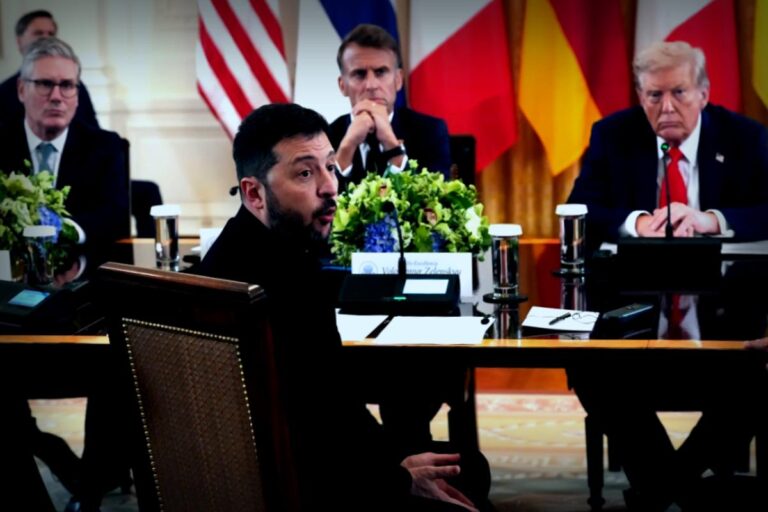
The strikes lasted for a grueling ten hours, resulting in the death of one person and injuring at least two dozen others. This escalation in violence coincided with Zelenskyy traveling to Florida for important talks with Donald Trump, who has proposed a plan to ameliorate the nearly four-year conflict that’s claimed the lives of tens of thousands.
Prior to heading to Florida, Zelenskyy made a pitstop in Canada, where he had a meeting with Prime Minister Mark Carney. During their dialogue, Carney announced an additional $2.5 billion (approximately £1.85 billion) in economic aid for Ukraine, condemning the overnight onslaught as “barbaric.” He stressed that there’s a path toward “just and lasting peace,” which would require a willing partner in Russia.
Zelenskyy indicated that he and Carney intended to engage in a video call with European allies concerning the ongoing conflict. This call is expected to feature Ursula von der Leyen, the President of the European Commission, who aims to address elementary points of contention, including security guarantees for Ukraine and reconstruction efforts, as well as territorial issues surrounding the Donbas region and the Zaporizhzhia nuclear plant.
The Ukrainian leader reflected on the recent airstrikes, asserting that the response from the international community towards Russia has been inadequate. “If Russia turns the Christmas and New Year period into a time defined by destroyed homes and devastated power plants, then we must respond with truly strong measures,” he stated, emphasizing the capabilities of the U.S. and Europe to take firm action.
Russia’s defense ministry claimed to have successfully downed 111 Ukrainian drones in what appeared to be retaliatory maneuvers. Meanwhile, reports have surfaced about Russia capturing two new towns in eastern Ukraine, namely Myrnograd and Guliaipole.
Zelenskyy highlighted that his meeting with Trump would aim to fine-tune details ahead of potential agreements. He remarked that a proposed 20-point peace plan is “90% ready,” with hopes to finalize all matters to 100%. He also mentioned that he would need public backing if he couldn’t secure a substantial agreement regarding territorial issues.
Following the recent strikes, Ukraine’s foreign minister Andrii Sybiha criticized Russia’s harsh responses to peace overtures made by Ukraine, describing the hostile actions involving large-scale drone and missile attacks across various locations in Ukraine, leaving a third of the capital in cold. With temperatures dropping to around 0C (32F), the humanitarian crisis deepens.
The Russian strikes necessitated a scramble of Polish fighter jets and led to the temporary closure of two airports in southeastern Poland, Rzeszów and Lublin.
Current peace efforts come after a surge in diplomatic activity last weekend in Miami, where representatives from both sides – including Trump’s envoy and son-in-law – met to discuss terms. The outcome is an adjusted version of an earlier peace proposal that many observers felt favored Kremlin demands.
While Ukraine is pushing for security assurances based on NATO’s Article 5 mutual defense framework, it’s still uncertain if Russia would approve such terms.
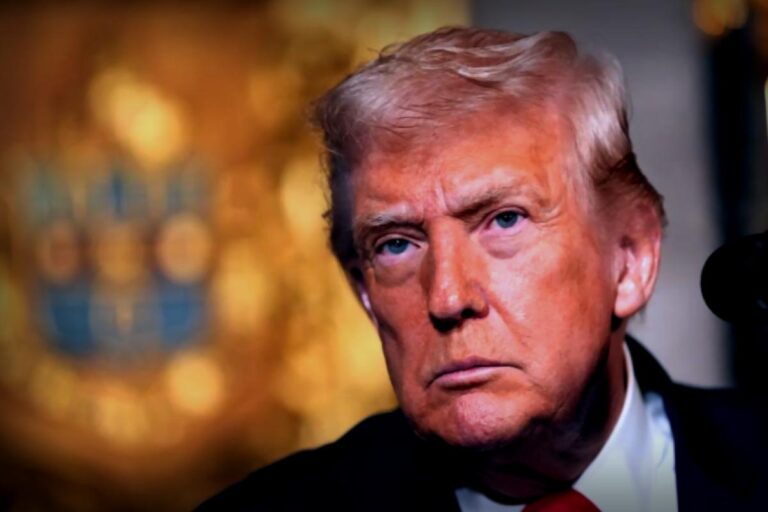
In a recent interview with Politico, Trump mentioned looking forward to the upcoming discussions with Zelenskyy, although he stopped short of endorsing the Ukrainian president’s plan, stating, “He doesn’t have anything until I approve it; we’ll see what he’s got.”
Moreover, Russian Deputy Foreign Minister Sergei Ryabkov leveraged a television appearance to critique Zelenskyy and European counterparts regarding the ongoing peace processes, asserting that reaching an accord is contingent upon increased political will from all involved parties. He also remarked that the current peace proposal fundamentally differs from what was first suggested by U.S. and Russian officials earlier this month. “Without adequately resolving the underlying issues of this conflict, achieving a lasting agreement will be quite impossible,” he concluded.