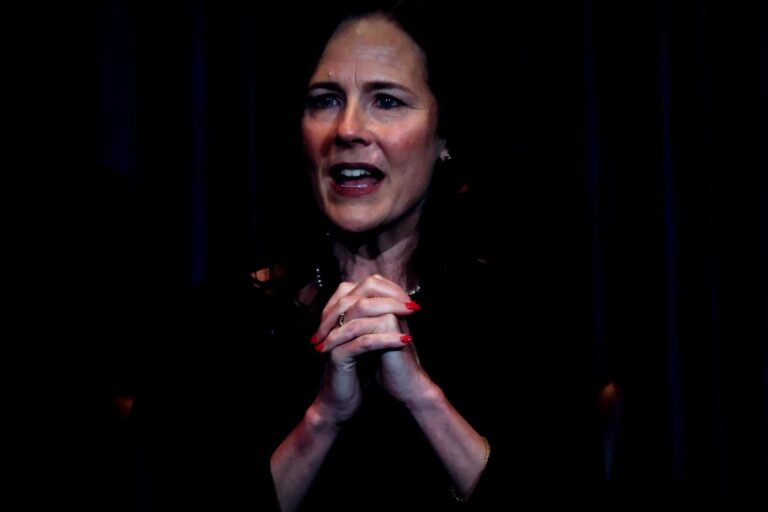


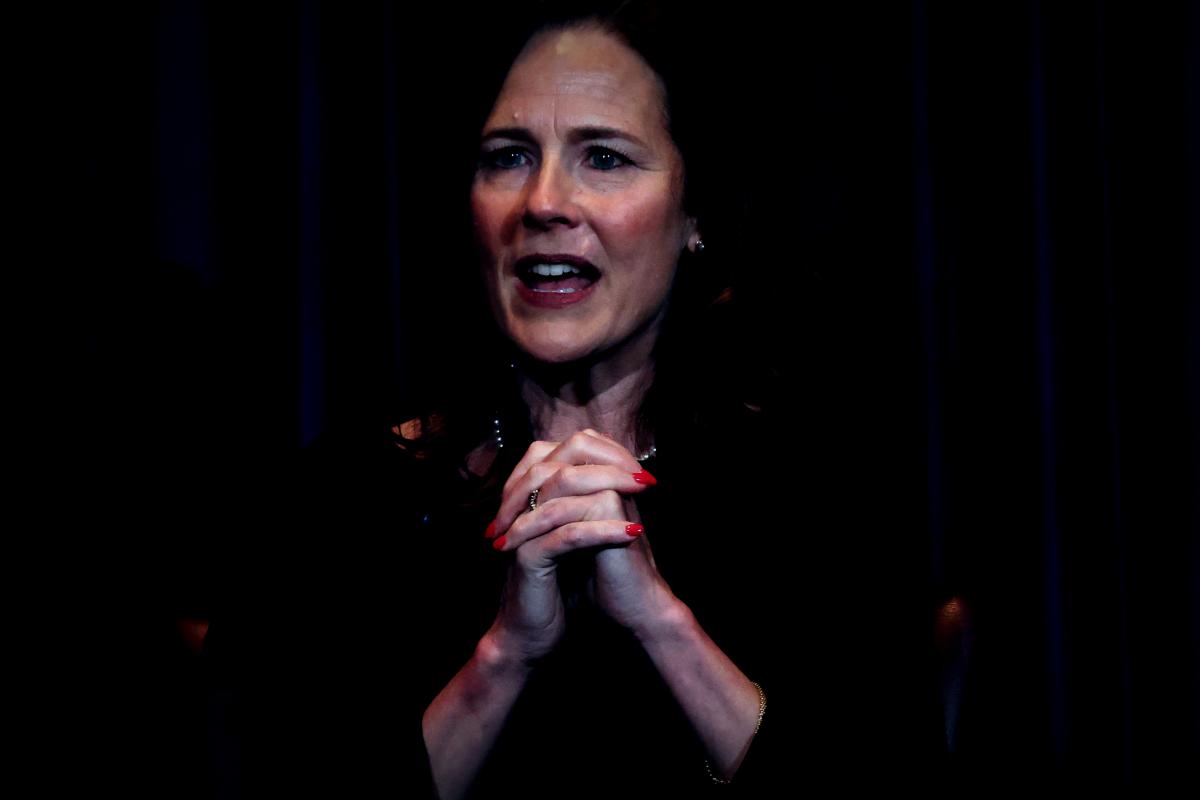
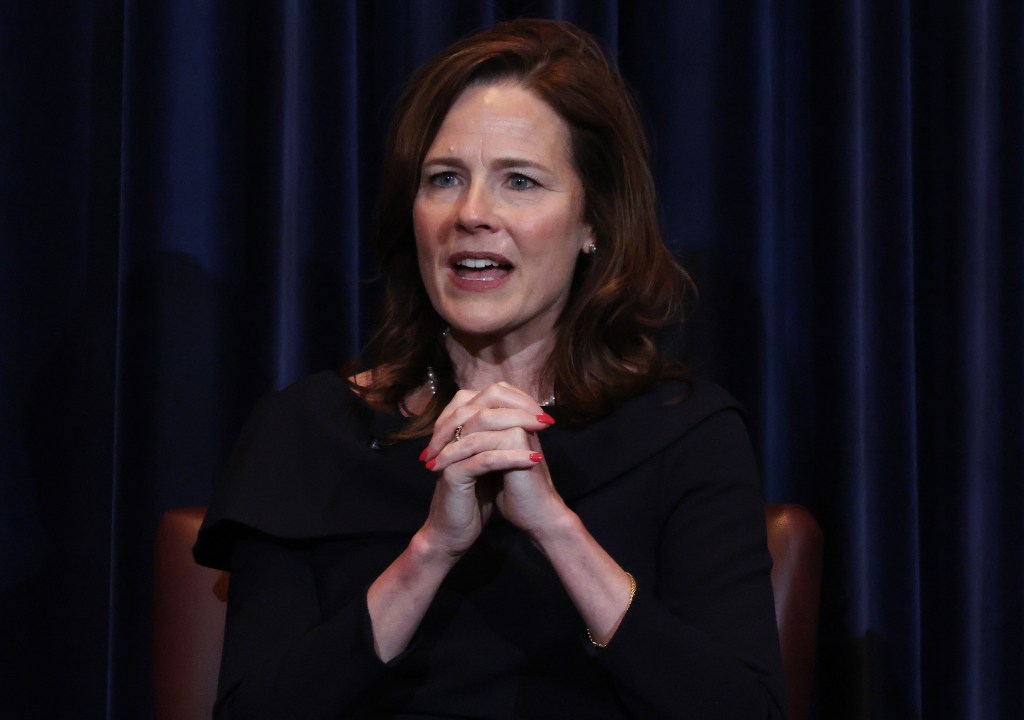
In a recent discussion, Supreme Court Justice Amy Coney Barrett expressed serious concerns over the current state of free speech rights in the United Kingdom.
Her comments were made during an interview with Bishop Robert Barron on his podcast, Bishop Barron Presents, which aired on Sunday. Barrett remarked, “Look at what’s happening in the U.K. regarding free speech rights. Opinions that deviate from the mainstream are not just unwelcome; they’re actually being criminalized. Thankfully, such scenarios can’t occur here in the U.S., thanks to the First Amendment.”
Why This Is Important
Barrett’s remarks come at a time when Britain’s regulation of speech has come under fire, with individuals like Vice President JD Vance voicing their concerns. Recently, attention has turned to the Online Safety Act, which demands that social media firms take down illegal content. Critics assert that this act is applied too broadly, resulting in the restricting of speech that is entirely legal.
Additionally, some case studies spotlight troubling developments. For instance, a British Catholic woman was the first person prosecuted for silently praying outside an abortion center, following the initiation of a new buffer zone law. Compounding these issues, police in London and Manchester have promised to take action against individuals making certain political statements.
Key Takeaways
During the podcast, Barron raised the thought of Catholic philosopher John Courtney Murray, emphasizing that societal harmony rests on shared beliefs. Barrett responded by highlighting the role of the U.S. Constitution in this context.
She elaborated, noting that freedom of speech and religion under the First Amendment serve not only as rights but also as pathways to mutual respect and understanding. “The First Amendment is our shield, ensuring that we must tolerate each other’s beliefs and ideas. In its absence, the risk to our freedoms would be dire,” Barrett stated.
Justice Barrett, a committed Catholic, has been on the Supreme Court since 2020, following her appointment by former President Donald Trump to s d Justice Ruth Bader Ginsburg. This shift solidified a conservative majority, which previously overturned the right to abortion.
Public Reactions
Vice President JD Vance remarked at the Munich Security Conference, “In Britain and throughout Europe, I’m concerned that free speech is losing ground.” He added, “It is true that in some instances, the most vocal advocates for suppression have emerged from my own country, which further complicates the issue.”
A U.S. State Department report on the U.K.’s human rights landscape highlighted “significant human rights issues,” pointing towards credible claims of serious confinements on free expression.
British Prime Minister Sir Keir Starmer responded to these assertions by declaring in September, “Free speech stands as a foundational principle in the United Kingdom, and we will always defend it resolutely.”
He proceeded to clarify, however, that there are limits: “I firmly advocate for free expression, but it’s crucial to shield children from content that poses a risk to their wellbeing.”
What’s on the Horizon
The discourse surrounding free speech in the U.K. is far from over and will likely escalate in the ensuing months.