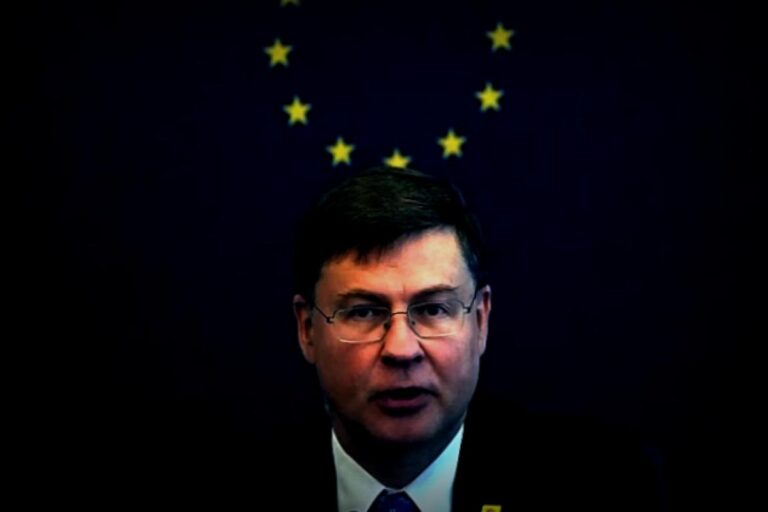



The European Union plays a vital role in boosting the power of smaller member nations, especially in today’s increasingly unpredictable global environment, according to European Commissioner Valdis Dombrovskis. He shared his thoughts with Euronews following a contentious US government report that labeled the EU as a threat to freedom.



“The strength of the EU is especially significant for its smaller member states. In a world where conflict is common and power dynamics shift rapidly, unity brings strength,” he commented during the show Europe Today.
Dombrovskis, originally from Latvia—one of the Baltic nations facing threats from Russia—has served as a Commissioner for an impressive amount of time and is currently in his third term.
His remarks come on the heels of the US revising its National Security Strategy, which criticized European economic strategies and suggested that poor policies and illegal immigration may hasten the downfall of European civilization.
The report emphasized the US objective of altering this trend, expressing approval for the rise of “European patriotic parties,” a term commonly interpreted to refer to conservative or right-leaning groups.
Dombrovskis asserted, “We definitely disagree with several aspects of the National Security Strategy, but there are points of consensus as well. It’s crucial for us to take a more assertive stance against Russia and in our support for Ukraine.”
According to him, displaying strength means ensuring ongoing financial backing for Ukraine, particularly as US support diminishes.
As all eyes turn to the upcoming European Council meeting, Dombrovskis labeled this moment “crunch time.” EU leaders will have to decide whether to provide a reparations loan to Ukraine or to initiate collective EU debt that could amount to €90 billion for the years 2026 and 2027.
Autonomy in European Decisions
In reaction to the US report, various European heads have rallied together.
On Monday, Costa responded firmly, stating, “Allies should not interfere in the political life or internal democratic decisions of one another,” emphasizing Europe’s right to determine its own policies.
“The United States cannot dictate Europe’s vision or impose its ideas about freedom of expression,” he added.
Kaja Kallas, the EU’s foreign policy chief, echoed these sentiments over the weekend in her interview with Euronews. She noted that the EU should manage its own domestic issues while focusing on global challenges in conjunction with allies.
Although Kallas acknowledged the differing opinions between the EU and the US on several key topics, she reinforced the idea that the EU has its own distinct plan that it must adhere to.
US President Donald Trump, reflecting on the European reaction to the revised strategy, stated that the US wishes to maintain a stable Europe and does not intend to see significant changes.