



Here are some key points for Republicans to consider while they plan their healthcare approach.
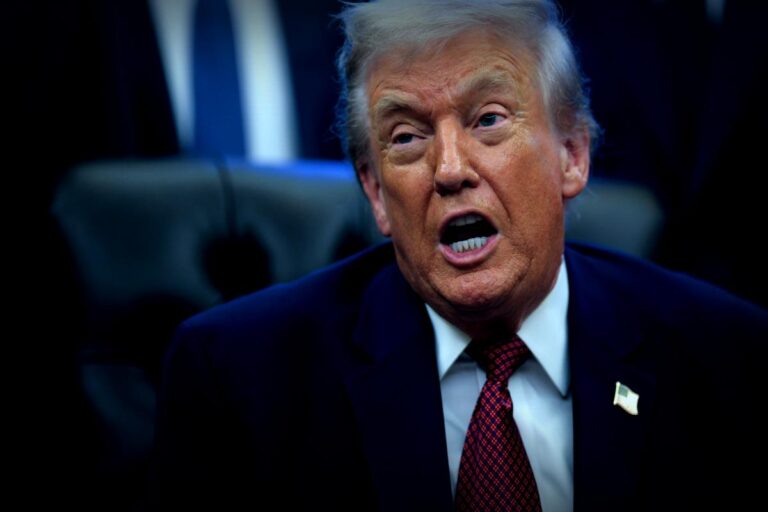
Donald Trump’s unpopularity stems from various factors, but one major complaint is that he hasn’t followed through on lowering costs as he promised. Coming up soon, over 20 million Americans could see health insurance premiums skyrocketing, with some experiencing price hikes of 100% or more when the extension for Affordable Care Act (ACA) subsidies ends. To top it off, support for Obamacare has climbed to a high of 57%, according to a Gallup poll.
Even with this information in hand, the Republicans have decided to let ACA subsidies sunset. How do they plan to handle public reaction as we gear up for the mid-term elections in 2026? It’s likely they won’t gain much favor.
Fifteen years after the ACA was introduced, it continues to be a major headache for the GOP. You’d think by now they’d have figured out how to deal with it and shift their focus elsewhere. Unlike conservative parties in other developed nations, which usually accept universal health coverage as a standard, the GOP seems determined to struggle with healthcare.
There’s an unspoken belief among Republicans that medical access falls under personal responsibility. They typically avoid pushing this idea because it isn’t popular—more Americans are convinced that it’s the government’s role to ensure health coverage for everyone, as noted by Gallup. As a result, the party has targeted proposals aimed at expanding coverage instead. This was quite effective until the ACA came along.
The U.S. has two major features making it particularly tough to roll out universal health insurance. First, the legislative process demands multiple majorities, unlike parliamentary systems, leading to imbalances, especially in the Senate, where conservatives are overrepresented.
The second aspect is that employer-sponsored insurance took root during World War II, giving American workers a stake in maintaining the privatized strategic approach. Because of a fear that reforming healthcare would affect this insurance model, lawmakers prioritized protecting existing benefits for those who already had them—especially since these individuals were often educated and politically active voters—over extending coverage to the uninsured.
The ACA managed to break through decades of legislative standstill by preserving the employer-driven system while broadening options for individuals who had lacked access. Low-income workers without employer-sponsored healthcare could steer towards Medicaid, while higher earners lacking insurance could access subsidized plans via individual exchanges that catered to all, regardless of health status.
Eventually passing the law came with its challenges. Republicans made all sorts of alarmist predictions—saying exchanges would fall apart, that healthcare costs would go through the roof, or that “death panels” would decide whom to treat. In the end, none of these scenarios unfolded. Instead, the promised ‘death panels’ were pure fantasy, spending trends actually improved, and the exchanges attracted millions of users, functioning smoothly.
Republicans, however, have never truly addressed that their gloomy predictions didn’t materialize. Moreover, they’ve failed to grasp how much the landscape of health insurance politics has shifted since the law came into play. Blocking reform was simple when no program existed to expand coverage. However, yanking insurance away from those who currently have it or cranking up their costs is a whole different game.
Some Republicans realize their pushback is unpopular yet resist adapting their stance to public sentiment. House Speaker Mike Johnson, reflecting the views of a majority in his party, labels the ACA marketplace as “a broken system,” almost as though the doomed forecasts for it had come to fruition, all while dismissing nearly 24 million beneficiaries, who now make up around 7% of the overall U.S. population, as being too negligible to concern themselves with.
“You’ll see a legislative package very shortly that aims to reduce premiums for all health insurance holders, not just the 7 percent,” he told journalists this Wednesday. For a long time, uninsured individuals could be overlooked, and Johnson’s casual mention of “the 7 percent” is evocative of times when that was the political norm.
Throughout his first term, Trump sought to evade this sticking point, promising to “repeal and replace” the ACA with a plan that would supposedly provide far superior insurance for lower costs. This tactic s ded during campaign trails but proved ineffective in actual governance.
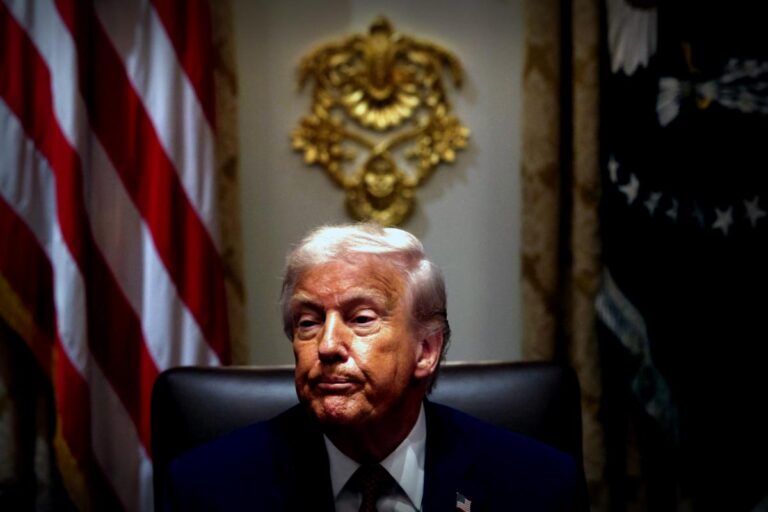
In his second term, Trump’s way of wishing away the balance of superior care versus lower costs has morphed into a belief that he can remove the insurance market middleman and return funds directly to consumers. “My goal is to empower people with better health insurance—and for less money,” Trump statedto Politico’s Dasha Burns on Monday, “They will receive the funds to procure the insurance that they prefer.”
However, this approach impulsively assumes that people can treat medical expenses like cash transactions at a grocery store. This model falters because individuals often lean on professionals for guidance on necessary services, coupled with skyrocketing medical expenses that many simply can’t afford without support, which is precisely why insurance is crucial for nearly everyone.
Trump inadvertently acknowledged this when he tried to elaborate his breakdown of this concept in front of reporters on Tuesday. “I’m all for money going straight to the people, not to the insurance companies, going right into the hands of the public. It could be distributed via health savings accounts among various channels,” he reflected. “And then the people can choose and opt for much better insurance and healthcare.”
His “strategy” points toward a shift away from funding insurance—in a move which he claims affects insurance companies advantageously—while suggesting that he will reward people with cash to purchase… insurance. Such muddied logic may keep Trump afloat during conversations without owning up to tackling an actual problem. But as January approaches with sky-high insurance costs on the horizon, real solutions will be urgently required.
At some point, perhaps, the GOP will come to terms with the reality that stubbornly resisting the expansion of healthcare access is politically perilous and unsustainable. Until then, they continue to navigate a landscape where the ACA has successfully provided vital benefits to millions, believing incorrectly that these same individuals will remain indifferent if these benefits are snatched away.