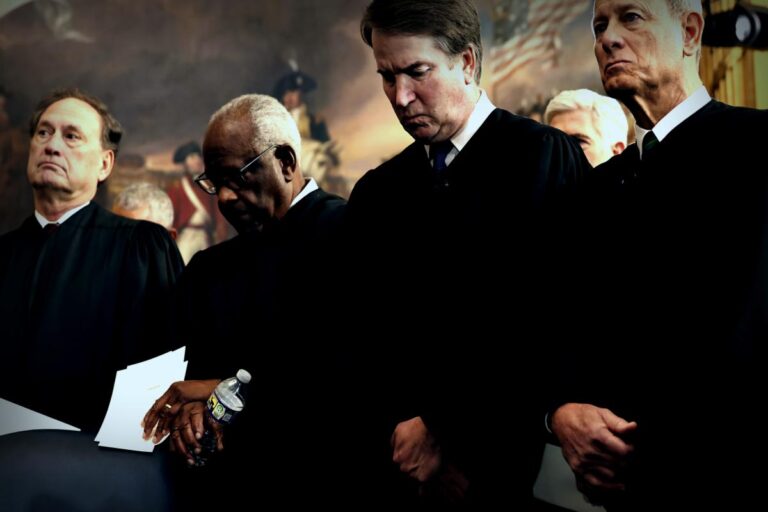



The Supreme Court hinted on Monday that it could be ready to overturn a long-standing rule about how much power a president has when it comes to firing members of independent federal agencies, specifically looking at a precedent that has been in place for 90 years. During the session, conservative justices challenged whether individuals such as Federal Trade Commission members should be protected from being dismissed without cause.
This discussion was sparked by former President Donald Trump’s removal of Democratic FTC commissioner Rebecca Slaughter back in March, even though her term was set to last until 2029. After a lower court ruled that Trump overstepped his authority, the Justice Department fought back, leading the Supreme Court to agree to hear the case—a move that could significantly change the power dynamics within the government.
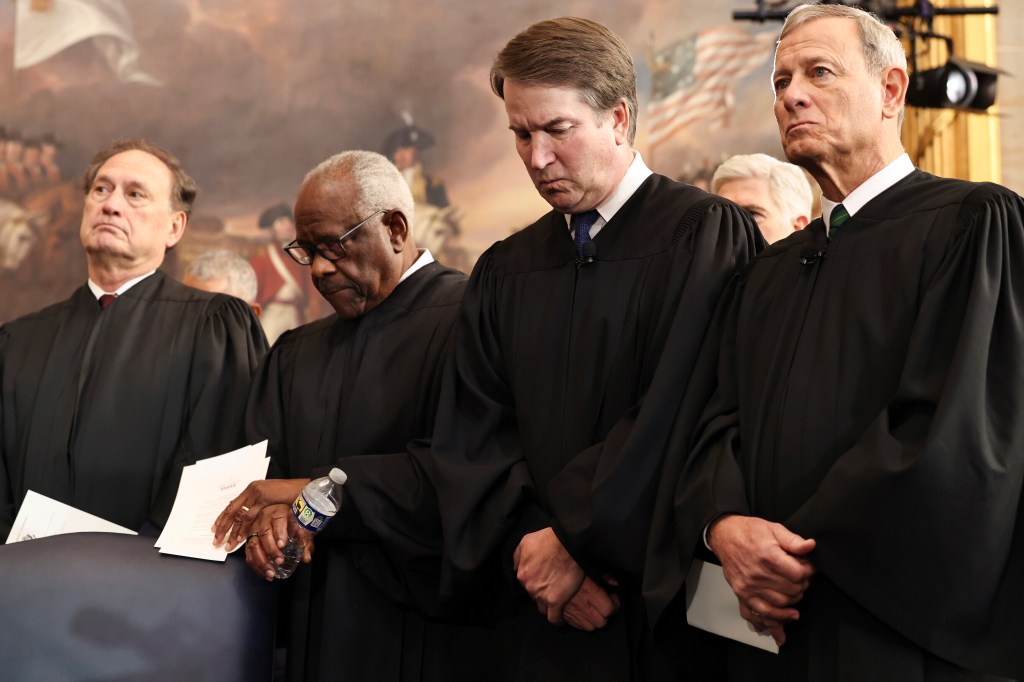
As the arguments unfolded over two hours, conservative justices openly questioned the relevance of the landmark 1935 case, Humphrey’s Executor v. United States, which established that the president can’t remove heads of independent agencies over policy disagreements. Chief Justice John Roberts indicated that this precedent may no longer align with how modern governmental agencies function.
“Humphrey’s Executor is really just a shadow of what people thought it meant,” Roberts expressed, pointing out that the FTC back in 1935 had little executive power compared to the authority it has aalanped today. He asked attorney Amit Agarwal representing Slaughter how much power Congress could actually delegate to independent bodies while still limiting presidential authority over their members.
While Agarwal acknowledged the potential risks involved, he justified that the current framework has worked well for almost a century, warning that extending Trump’s ability to dismiss appointees could endanger everything established.
Justice Samuel Alito questioned Agarwal’s position by asking, “What’s to stop Congress from taking more and more power away from the president?”
Justice Amy Coney Barrett, seen by some as a possible swing vote, also expressed skepticism. Although independent agencies have performed adequately, she noted it’s hard to predict the situation 20 years down the road, suggesting that the existing framework might not adapt well to future changes.
Solicitor General John Sauer, arguing for the Trump administration, called for a total reversal of Humphrey’s Executor, branding the decision as an “indefensible outlier” that hasn’t stood up against the test of time. His stance was that Congress had created a “headless fourth branch” that lacks political accountability.
Overall, it seemed like the conservative majority on the court found some resonance in Sauer’s viewpoint, advocating for maintaining extensive presidential authority over independent agencies.
Conversely, the court’s three liberal justices raised strong objections. Justice Sonia Sotomayor accused the administration of essentially wanting to dismantle government structures by removing Congress’s capability to establish independent organizations meant to balance power. She emphasized the need for an independent framework to better manage agencies like the FTC.
Justice Elena Kagan expressed concern that empowering Presidents in this way would create unchecked authority, allowing they could potentially control both executive functions and policy decisions, even replacing nonpartisan experts with loyalists. “It can’t be in the best interest of the citizens if a president fires all the scientists and replaces them with political allies,” she stated.
Justice Ketanji Brown Jackson also questioned whether an increase in presidential control genuinely improved democratic accountability, pointing out that Congress created independent agencies to safeguard against direct political influence.
The debate frequently revisited the status of the Federal Reserve, essential for U.S. economic health. Justice Brett Kavanaugh, a conservative generally aligning with the administration, expressed concern over the implications this could have on the Fed’s independence.
As the discussion wrapped, Sauer attempted to differentiate the Federal Reserve from other agencies, telling the justices it operates under a “quasi-private” model with a unique layout, but Kavanaugh remained unconvinced.
The Supreme Court has let many of Trump’s disputed firings to occur except for one notable case: the attempt to oust Federal Reserve Governor Lisa Cook. Arguments for this case are scheduled for January, heightening the importance of Monday’s hearing.
Background on Rebecca Slaughter
Rebecca Slaughter is a Democratic FTC member known for her dedication to consumer rights, antitrust actions, and tech regulations. She’s recognized as a strong advocate for increasing oversight on large corporations.
Who Appointed Rebecca Slaughter?
Appointed by President Barack Obama in 2018 and later reappointed by President Joe Biden, her term is set to last till 2029, making Trump’s action to dismiss her a significant part of the ongoing Supreme Court deliberations around presidential dismissal authority.
What’s Next?
As justices seem deeply divided, the ruling expected by June could reshape the definition of presidential power and the status of many independent agencies who’ve traditionally functioned without much intervention from the White House.
Reported by the Associated Press.