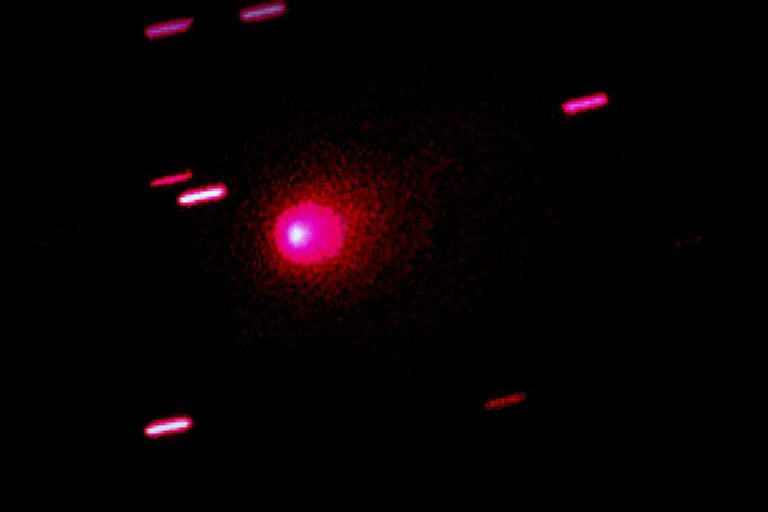



Mark your calendars! December 19, 2025, is the day when the interstellar comet 3I/ATLAS is set to make its closest approach to Earth.
This amazing event, along with the surrounding days, gives astronomers and comet-chasers their best shot at observing this intriguing object as it heads further away from our Solar System. Once it zips past, we won’t see it again. The closest it will get, known as perigee, is about 270 million kilometers (or 168 million miles) from Earth. That’s almost double the 150 million-kilometer distance between Earth and the Sun, yet still dangerously close for some thrilling observations.
Note:Don’t freak out! 3I/ATLAS isn’t some alien death probe, but it sure is a strange one.

Since being discovered on July 1, 2025, 3I/ATLAS has emerged as one of the quirkiest comets we’ve ever seen. With each close approach—to the Sun, then Mars, and now Earth—it only gets stranger.
Data gathered shows that this comet’s coma—the cloud of gas and dust around it—has produced an unusually early outgassing of significant carbon dioxide. More observation revealed high levels of hydrogen cyanide (HCN) and methanol (CH3OH) as the Sun’s heat warmed the comet and released its icy components.
Initial research also flagged astoundingly large amounts of nickel and iron, hinting at a “potentially extreme composition” that’s unlike any comet we’ve come across so far.
In early October, 3I/ATLAS zoomed past Mars, creating quite a buzz in the astronomical community. However, when the comet’s path took it behind the Sun, observations of it were nearly impossible during a key period known as perihelion—its closest approach to the Sun—which happened on October 29. Once it reemerged from the Sun’s glare, scientists quickly shifted focus back to this intriguing object.
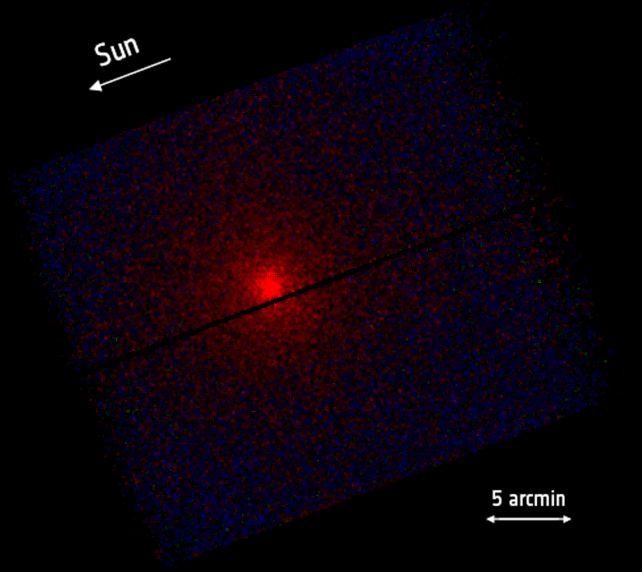
The ESA’s XMM-Newton observatory set its sights on 3I/ATLAS for an impressive 20 hours, capturing the glow of X-radiation resulting from the solar wind pounding its coma. The observatory specializes in detecting soft X-ray emissions from elemental gases like carbon, nitrogen, and oxygen produced during these cosmic collisions.
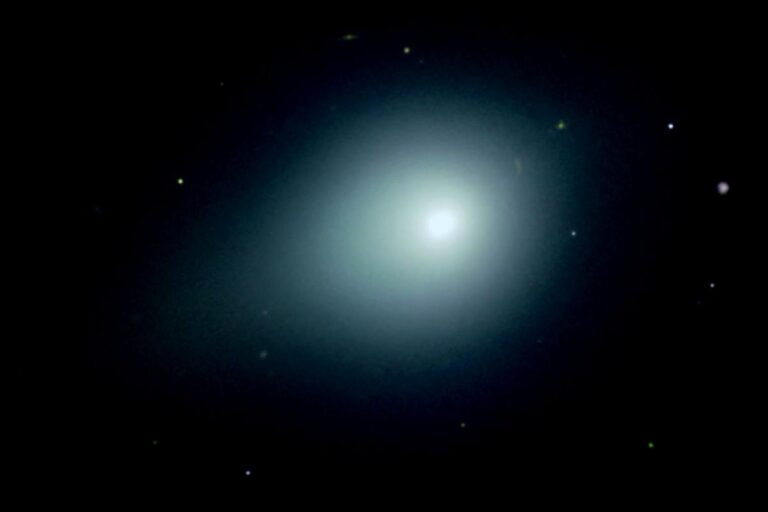
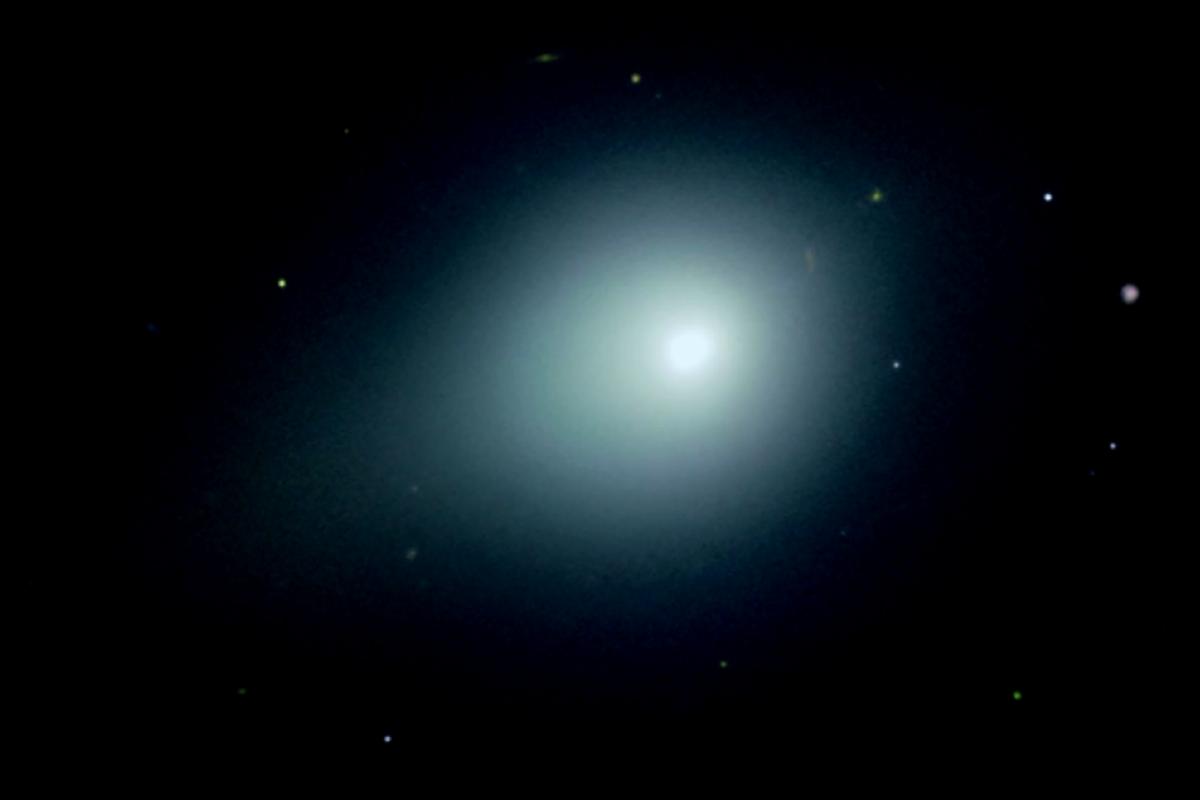
In November, images from NOIRLab’s Gemini North telescope hinted at a green tinge, deviating from earlier reddish looks associated with organic substances known as tholins that coat its surface.
The green glow seen in many comets typically comes from diatomic carbon (C2), which shines fluorescent green when energized by solar rays. That said, pre-perihelion assessments of 3I/ATLAS showed it was lower in C2 content than expected. This compound isn’t usually part of comet ice but can form and break apart quickly from carbon atoms under solar radiation.
The latest analyses suggest that 3I/ATLAS may have only recently started producing C2, marking yet another odd quirk in its behavior as it traverses the Solar System.

What does all this mean? Some experts speculate that 3I/ATLAS may be an unusually metallic entity with potential cryovolcanoes spewing gases into the cosmos. Others theorize it could be on the verge of running out of its ice, possibly transitioning into a more stable, or post-comet, asteroid.
Nevertheless, its behavior, despite the oddities, has all signs pointing to it being a comet. As we approach the critical observation period, astronomers hope to gain further insights into how 3I/ATLAS stands apart from our own Solar System’s array of comets. The subsequent analyses may offer valuable clues about the mysterious realms of interstellar space.
“This object is a comet,” emphasized NASA associate administrator Amit Kshatriya back in November. “It shows all the traits of a comet, and each clue leads back to it being a comet. But since it’s from beyond our Solar System, it becomes increasingly fascinating and scientifically vital.”
Header image credit: International Gemini Observatory/NOIRLab/NSF/AURA/B. Bolin
Image Processing: J. Miller & M. Rodriguez (International Gemini Observatory/NSF NOIRLab), T.A. Rector (University of Alaska Anchorage/NSF NOIRLab), M. Zamani (NSF NOIRLab)