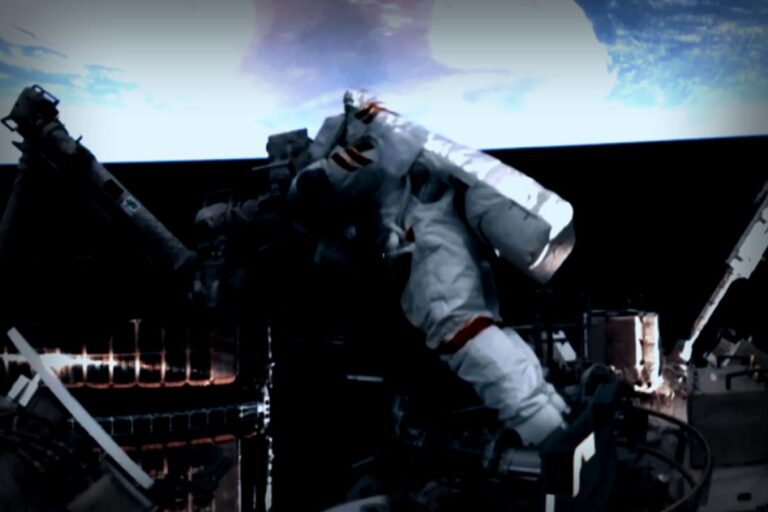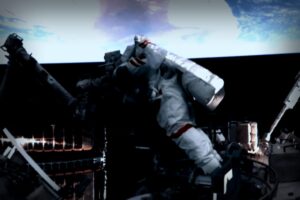
Things on the International Space Station (ISS) are quite hectic this week, as a mix of experienced astronauts and new arrivals dive into research while handing over responsibilities during this busy transition period.
One group is gearing up for their trip back to Earth, but in the meantime, the ISS is fully occupied with vital human-health and physics experiments.
This day underlines just how important scientific work and team adjustments are happening simultaneously in this extraordinary orbiting lab.
Focus on Human Research
NASA reported that Flight Engineer Zena Cardman spent a significant part of her day on biomedical research related to blood processing and spatial-cognition tests under the CIPHER program, which monitors astronaut health throughout their missions.
After helping with blood collections, Jonny Kim took part in centrifuging and storing the samples. Then, Cardman completed a microgravity navigation test using a computer tool.
Kim also set up the Astrobee free-flying robots for ground-controlled tests, aiming to boost their autonomous functionality.
Next, he trained Sergey Kud-Sverchkov, a Roscosmos cosmonaut, on how to use the Advanced Resistive Exercise Device (ARED). Kim was also busy preparing for his return aboard Soyuz MS-27 on December 8, along with comrades Sergey Ryzhikov and Alexey Zubritsky.
Technical and Environmental Studies
Meanwhile, Kimiya Yui from JAXA was troubleshooting a CO₂-removal experiment inside the Kibo lab, contributing to the ongoing development of life-support systems for the Artemis missions.
In addition to that, he kept on unloading science equipment from the Cygnus cargo vehicle.
Roscosmos’s Flight Engineer Oleg Platonov took care of downloading Earth images captured overnight, performed airflow and lung-function assessments for a breathing-in-space study, and gathered air samples while also measuring radiation levels, as noted by NASA.
Sources: NASA