



The famed comet 3I/ATLAS is making its grand exit from our solar system, but not before Earth’s space organizations captured some of the sharpest images of it to date.
First spotted in late June and confirmed as the third known interstellar object in July, 3I/ATLAS has been speeding through our inner solar system at a whopping 130,000 miles per hour (about 210,000 kilometers per hour). This colossal, jetting snowball came closest to Mars and the sun in October, and is set for its nearest approach to Earth on December 19, where it’ll be approximately 170 million miles away—nearly double the distance between Earth and our sun.
As it charges toward this significant moment, spacecraft from NASA and the European Space Agency (ESA) are itching to seize as many up-close images as possible. Just this week, both agencies released new photos of the comet, showcasing its vibrant brightness and activity following its recent swing by the sun, as it expels large amounts of gas and dust into space.
Hubble’s Amazing Insights
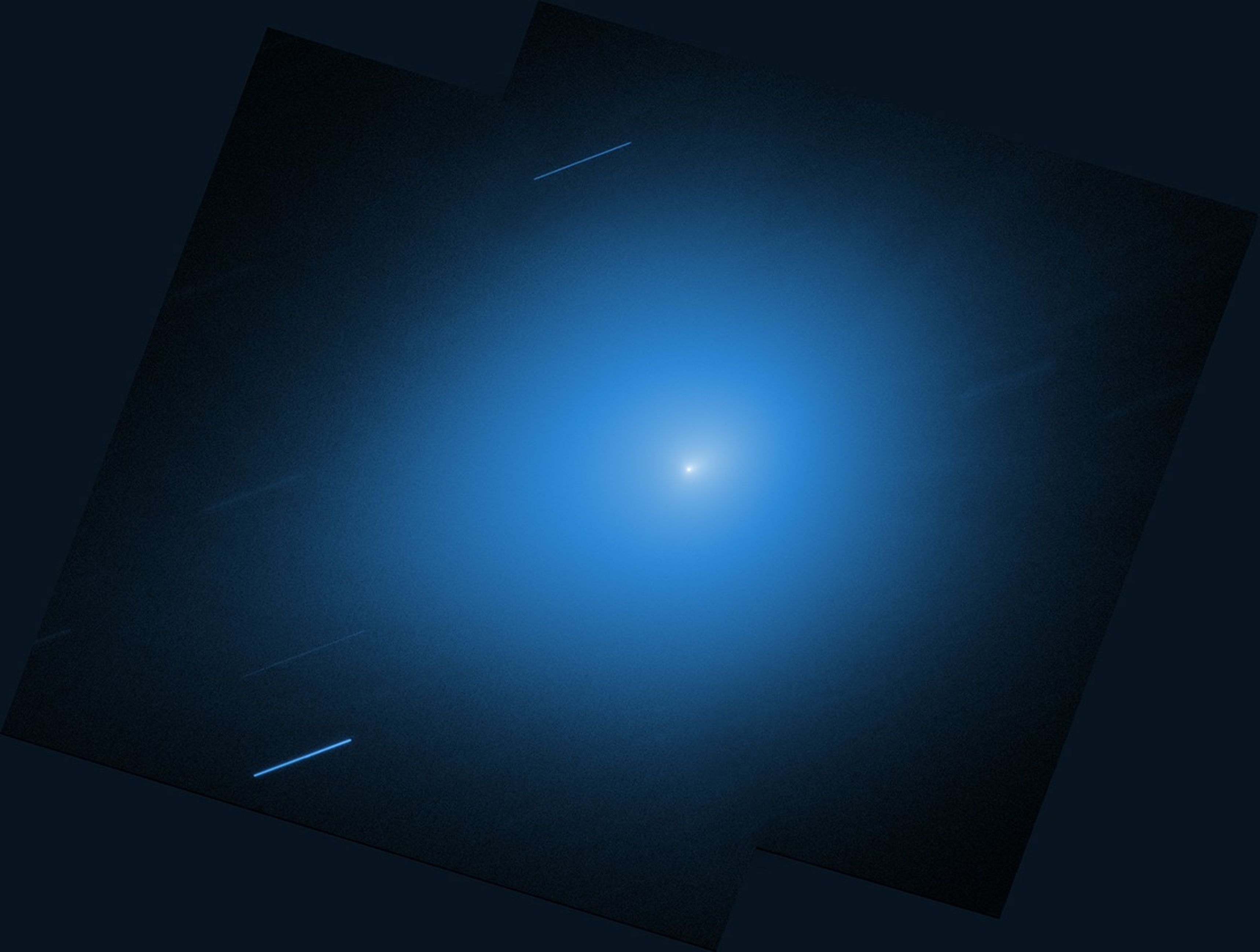
On December 4, NASA unveiled stunning new images of the comet captured by the Hubble Space Telescope. The bright white orb visible in the center shows the comet’s nucleus (the main part) along with its coma, a bright cloud of gas and dust enveloping it. The background is a blur of stars stretched into streaks while Hubble’s camera remains laser-focused on the speedy comet.
Ttypically, comets become brighter as they approach the sun due to ice melting and turning into gas. This gas gets pushed away from the sun, forming a tail. The hottest, sunward side of the comet can also release jets of gas and dust directed toward the star. These phenomena can be faintly spotted in the recent Hubble snapshot.
This picture was snapped on November 30 when Hubble was about 178 million miles (286 million km) away from the comet—much closer than during its initial observation in late July, which captured merely a blue streak. That first glimpse, however, allowed scientists to estimate the size of 3I/ATLAS between 1,400 feet (440 meters) and 3.5 miles (5.6 km) wide, potentially marking it as the largest interstellar object known so far.
While the comprehensive details about the coma’s structure from this recent image haven’t been revealed just yet, they are expected soon.
ESA Delivers Fresh Perspectives
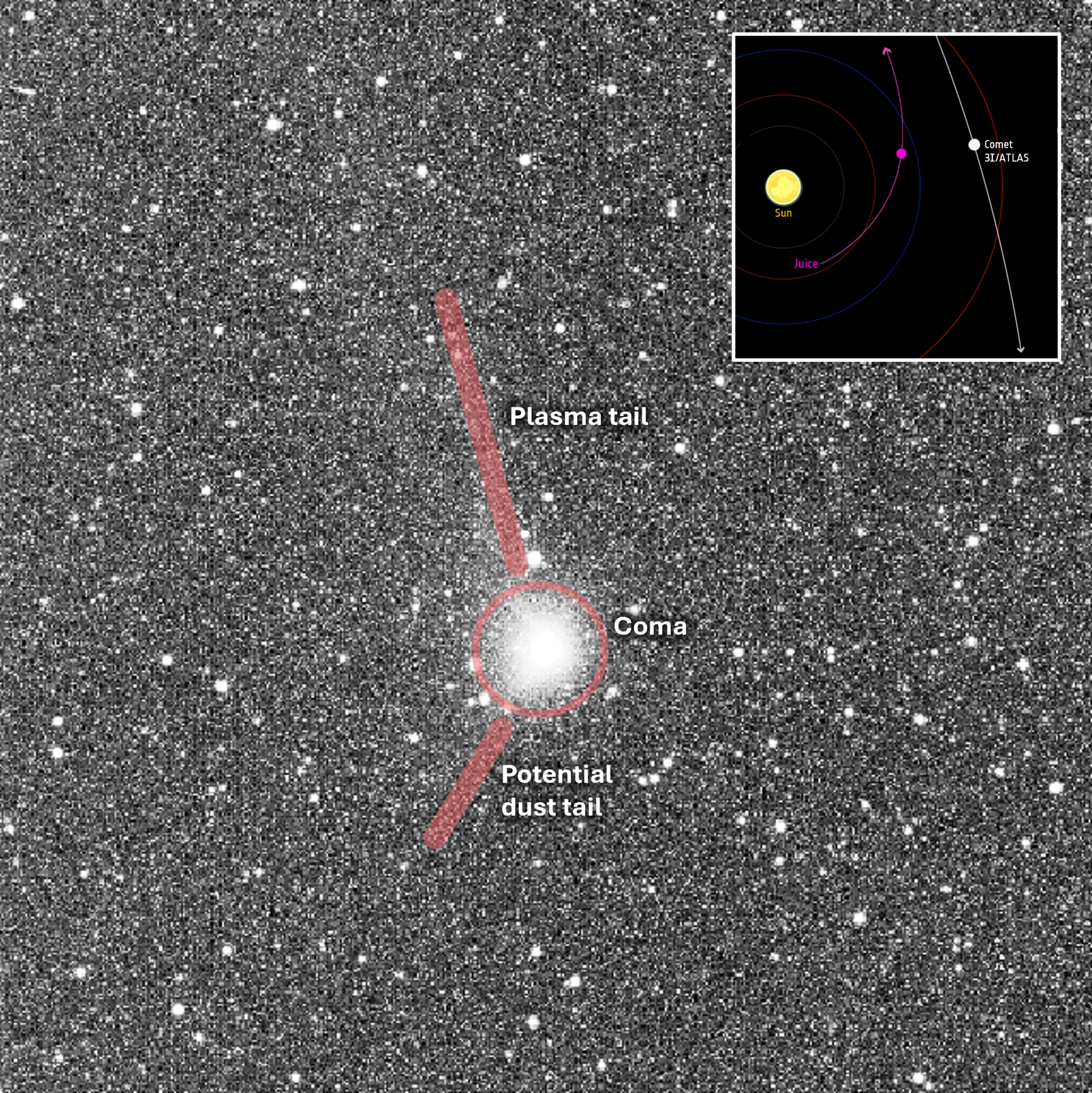
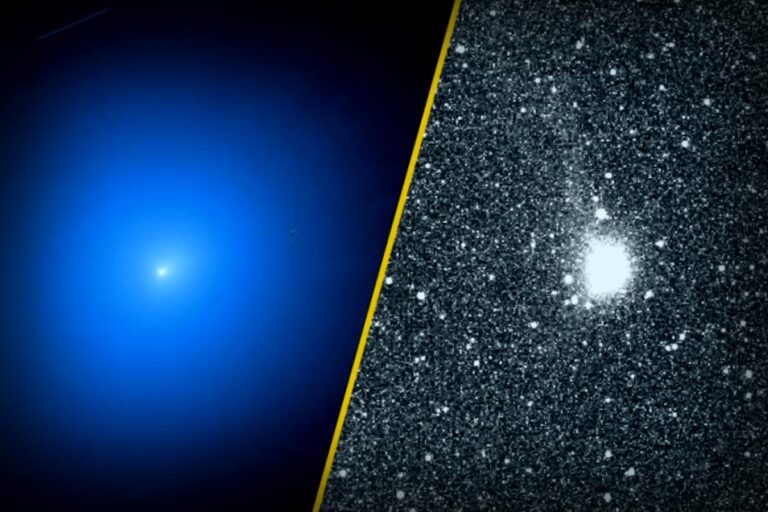
On the same day, ESA shared its fresh view of the comet, taken by the Jupiter Icy Moons Explorer (Juice), which is on a mission to investigate Jupiter’s moons for signs of potential life. The juice Orbiter captured this snapshot on November 2, shortly after 3I/ATLAS’s proximity to the sun.
Located even nearer than Hubble at just 41 million miles away (around 66 million km), Juice captured a comet full of action.
“Not only can we distinctly see the brilliant gas halo, or coma, around the comet, but there’s also a hint of two tails,” stated an ESA representative in a recent announcement. “The comet’s ‘plasma tail,’ formed from electrically charged gas, is visible stretching up in the image, alongside a fainter ‘dust tail’ of tiny solid particles extending towards the lower left.”
Counting Down to Earth’s Close Encounter
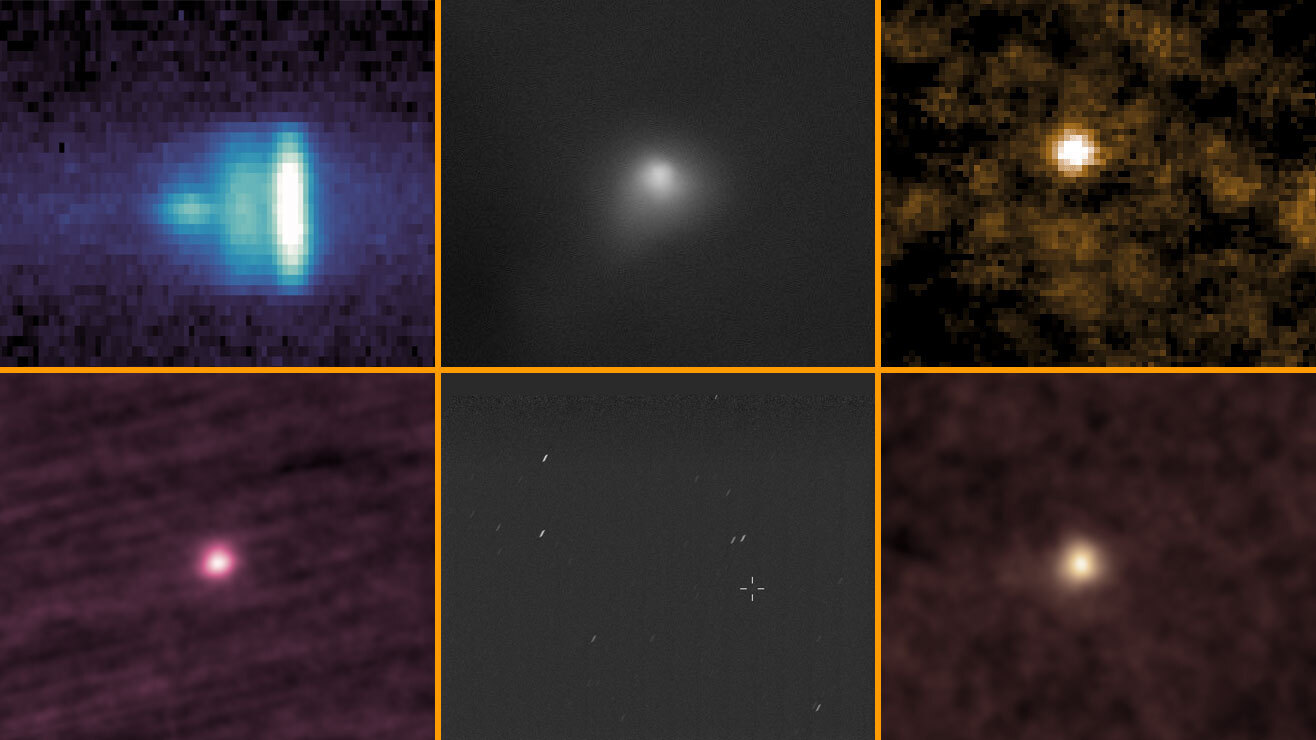
Juice used five scientific instruments across two days to oversee 3I/ATLAS, yet besides this sneak peek, we’re waiting for the total dataset, which is slated to arrive on Earth by late February 2026, according to ESA. Currently, Juice is using its main antenna to shield itself from the sun’s heat, which means it’s relying on its smaller antenna to transmit its findings.
Although we can’t extract too much information just yet from NASA’s and ESA’s fresh images without complete scientific data, it reinforces that space exploration yields incredible opportunities. Hubble and Juice are among several spacecraft that have observed 3I/ATLAS from various corners of the solar system, including Mars rovers, solar orbiters, asteroid trackers, and other telescopes that weren’t initially designed for tracking comets.
And there’s much more to come! As 3I/ATLAS nears Earth, the James Webb Space Telescope will also take a look at this fascinating comet, while countless observatories and amateur stargazers eagerly await their turn to observe it as well. When a mysterious wanderer from the unknown approaches us, every observation counts.