




For years, researchers have pondered the existence of life beyond Earth, and now a remarkable find on Mars could bring us closer to an answer.
The red planet has always captivated our imaginations, but what makes this discovery stand out even more? It’s not just another crater or mineral discovery.
The Perseverance rover, which has been tirelessly exploring Mars for several years, has gathered a wealth of samples and data. But this latest rock has taken center stage.
It has peculiar characteristics that are not typical in the realm of lifeless geology.
A Mars Rock That Raises Profound Questions

According to NASA scientists, a rock sample taken by Perseverance, referred to as Sapphire Canyon, may offer the strongest hints yet that tiny life forms once thrived on Mars. This specimen was extracted from an ancient rock formation named Cheyava Falls, located near the Neretva Vallis river valley—an area shaped by flowing water more than three billion years ago.
Researchers were intrigued by the peculiar black markings resembling leopard spots, alongside other smaller flecked patterns within the rock. They believe these features could indicate past biological processes. After an extensive year-long peer-review assessment, it remains uncertain if a non-biological explanation for these phenomena is possible, although further investigations are still needed.
Clues Locked in an Ancient Lakebed
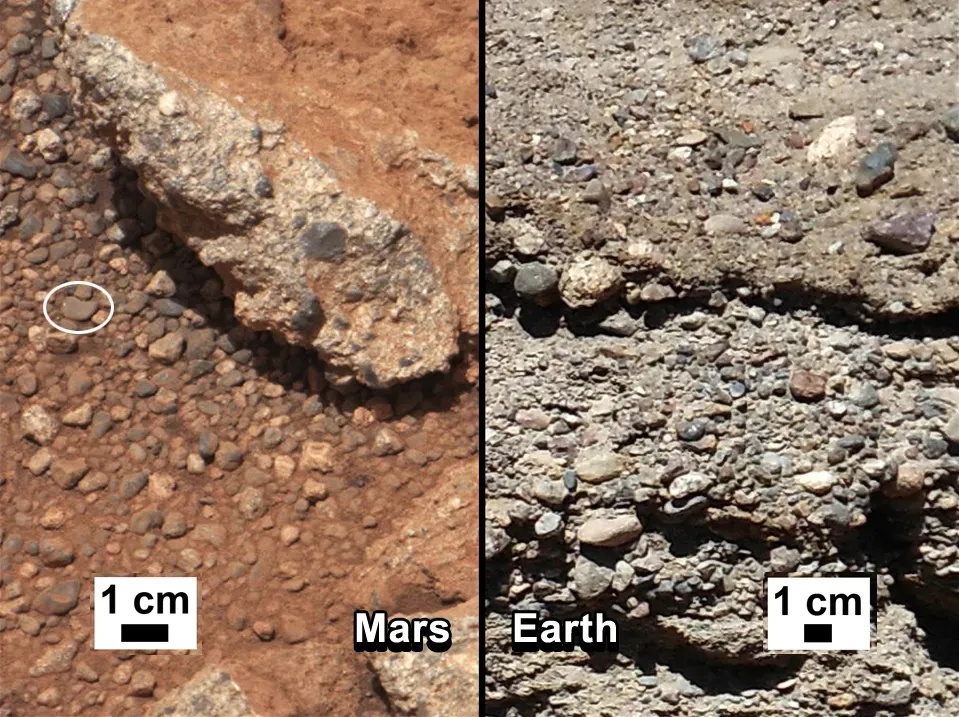
This unique rock was formed in what used to be an environment filled with rivers and lakes within Jezero Crater, where layers of mud, sand, and water solidified into stone. Equipment onboard Perseverance has identified organic compounds, as well as calcium sulfate veins created by ancient water flows, plus minerals like iron and phosphate occurring in the rock’s distinctive spotted regions.
On our own planet, similar chemical signatures are typically linked to microbial activity in sediments. Scientists point out that these reactions might have supplied vital energy sources to microbes, possibly preserving images of a Martian environment conducive for life during an era when life was just starting to emerge on Earth as well.
Why the Final Answer Must Wait

Despite all the excitement surrounding this discovery, NASA urges caution. It’s possible that the spotted characteristics may also form due to non-biological chemical reactions, although such processes usually necessitate higher temperatures than what scientists suspect existed in this context.
To properly assess the rock’s origins, an eventual return of the sample to Earth is crucial. Here, more sensitive lab instruments could help discern whether those features represent genuine signatures of life. While the timeline for bringing Martian samples back is still unclear—largely due to budget constraints—researchers collectively agree on one thing: it’s imperative to resolve one of humanity’s most intriguing questions: did life ever thrive beyond our planet?