


We’re just a few days away from the mysterious interstellar object 3I/ATLAS making its closest flyby of Earth before it zooms out of our solar system, never to return.
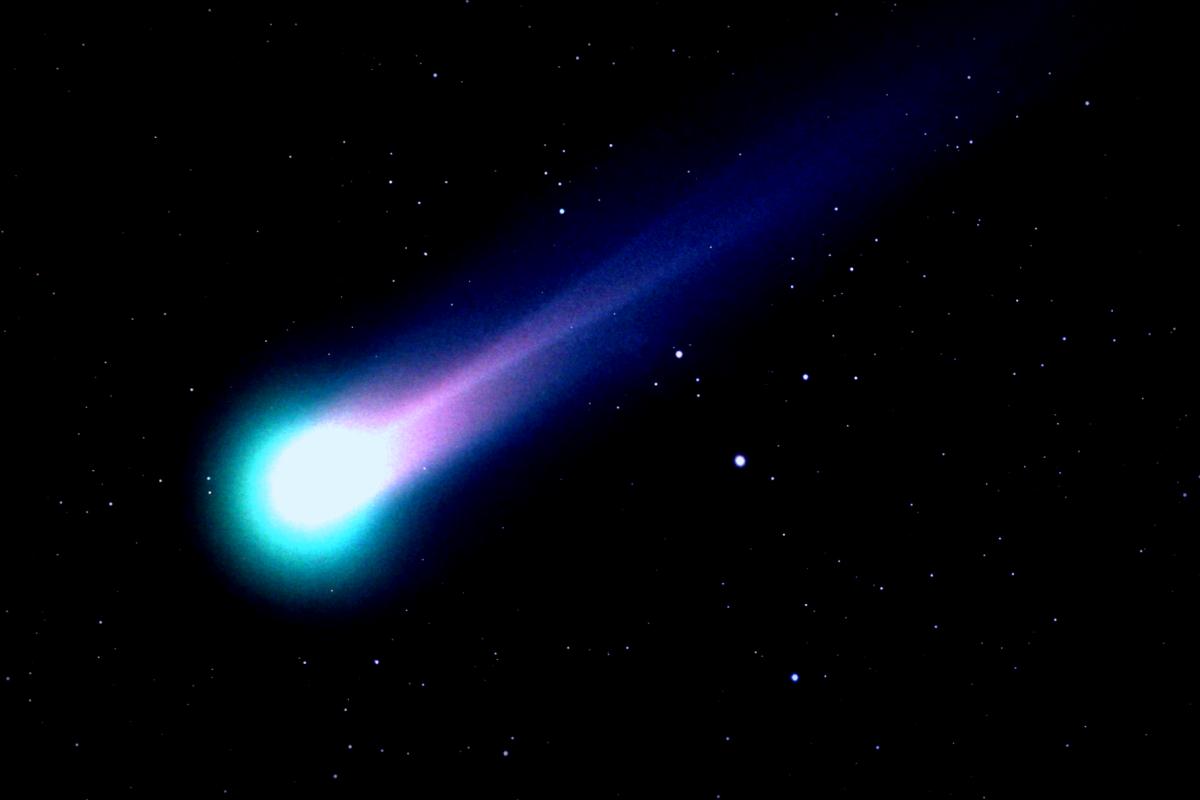
This intriguing object is thought to be a comet hitching a ride from the far reaches of space. It’s set to come within nearly double the average distance between Earth and the Sun. While that might sound like a huge gap, astronomers are eager to aim their telescopes—both on Earth and in space—at this exceptional object for what’s likely their best chance to examine it closely.
With eager anticipation building, Avi Loeb, a Harvard astronomer known for his bold theories about the object possibly being an alien spacecraft, is diligently following the developments with 3I/ATLAS. He’s drawn attention to what he describes as several intriguing anomalies.
One of the standout features that caught his eye is how the object’s trajectory aligns almost perfectly with the planets of our solar system, which seems pretty coincidental. But that’s just scratching the surface, especially considering the object’s unusually large estimated size, its close encounters with several planets, a surprising concentration of carbon dioxide ice and gas, and a peculiar “Sunward jet” that he proposes could be a mechanism to protect against micrometeoroids.
Recently, he referenced a new letter published in the journal Astronomy & Astrophysics, where a team of Spanish astronomers detailed their observations of a wobbling high-altitude jet from the comet as seen by the Two-meter Twin Telescope in Tenerife between early July and September.
According to their findings, this jet—facing the Sun and described as an “anti-tail”—is angled less than eight degrees from the pole aligned with the object’s rotation, as Loeb explained in his recent blog. This means that “3I/ATLAS has a stable dayside and nightside that swap roles at perihelion,” or when it’s closest to the Sun.
3I/ATLAS hit perihelion on October 29, getting as close as 126 million miles to the Sun.
Loeb posits that the chance of the object’s rotation axis being aligned within just eight degrees of the Sun is incredibly slim—only 0.5% based on his calculations—leading him to believe that such a smooth transition from dayside to nightside is highly unusual.
He elaborated, stating, “Without this unique alignment, the anti-tail jet towards the Sun would have been angled much more broadly when compared to the rotation axis, resulting in a bigger wobble than what we’ve observed. A larger misalignment could also lead to notable gaps in its activity as it moves from the dayside to nightside,” Loeb remarked.
Another point of curiosity is that 3I/ATLAS’s Sunward anti-tail didn’t vanish even after reaching the Sun’s closest point, perhaps suggesting a “new icy pocket near the other side of the rotation axis,” which may create a new prominent anti-tail jet following perihelion.
Loeb added, “A technological spacecraft could have a valid reason for aligning gas flows from its thrusters towards the Sun.” Nonetheless, he cautioned that we still lack high-resolution imagery showing the jet’s orientation near perihelion.
There are many more questions to explore, and Loeb remains hopeful that upcoming spectroscopic observations of the material in 3I/ATLAS’s anti-tail will provide further insights.
Discover more about 3I/ATLAS:3I/ATLAS Continues to Exhibit Strange Characteristics as it Nears Earth