


Written by Guy Faulconbridge
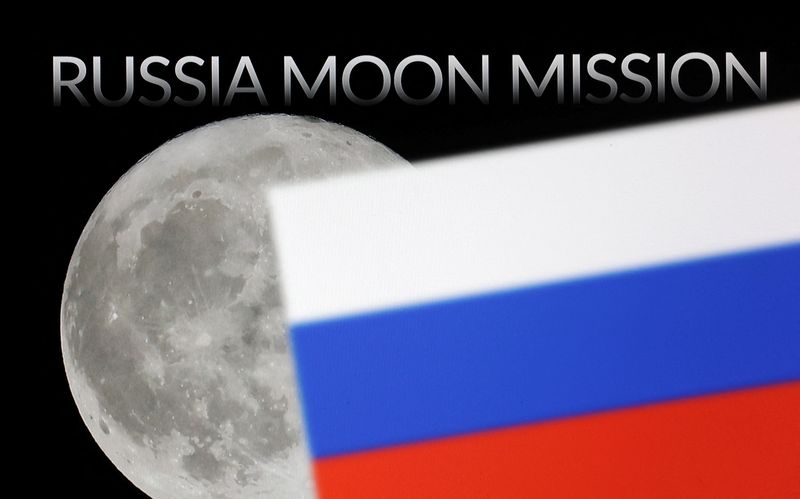
MOSCOW, Dec 24 (Reuters) – In an ambitious move, Russia is planning to build a nuclear power plant on the moon within the next ten years. This facility is expected to support the Russian lunar space program and a collaborative research station with China, as various countries race to tap into the mysteries of Earth’s only natural satellite.
Since Yuri Gagarin made history as the first human in space back in 1961, Russia has flaunted its reputation as a key player in the arena of space exploration. However, over the years, it has seen its prominence somewhat diminish versus the United States and, more recently, China.
In fact, Russia’s recent space endeavors faced a setback when the unmanned Luna-25 landed harshly on the lunar surface in August 2023. Unlike the past, when Russia was synonymous with space vehicle launches, innovators like Elon Musk now occupy the front stage.
What’s the Deal with the Lunar Nuclear Reactor?
Roscosmos, the state space authority of Russia, announced they intend to construct this lunar energy plant by 2036 and have already inked a deal with the Lavochkin Association aerospace firm.
While Roscosmos hasn’t explicitly confirmed that the facility will be powered by nuclear energy, it has noted that key players in the project include Rosatom, Russia’s state nuclear corporation, and the Kurchatov Institute, the country’s leading facility for nuclear research.
The core goal behind this project is to generate energy for not only Russia’s lunar missions—such as operating rovers and running an observatory—but also to augment the infrastructure of the collaborative International Lunar Research Station shared with China.
According to Roscosmos, this initiative represents a significant stride towards establishing a sustainable scientific base on the moon while transitioning from sporadic missions to a more extensive lunar exploration agenda.
Dmitry Bakanov, the head of Roscosmos, has indicated that one of the long-term objectives involves plant operation on the moon and conducting exploration missions to Venus, often called Earth’s “sister” planet.
Notably, the moon, sitting about 384,400 kilometers (or 238,855 miles) from Earth, plays a critical role in stabilizing our planet’s climate through its gravitational effect and facilitates tidal motions in Earth’s oceans.
U.S. Also Eyeing Nuclear Technology for Lunar Missions
Russia isn’t alone in its lunar ambitions. NASA recently revealed plans for a nuclear reactor on the moon, anticipated to be operational by the early fiscal quarter of 2030.
U.S. Transportation Secretary Sean Duffy described the competition, stating, “We’re in a race to the moon and with China as well. To establish a lunar base, we need reliable energy sources.”
Duffy conceded that the U.S. has lagged in this lunar race but emphasized the necessity for energy to support sustainable human life on the moon, which in turn would facilitate manned missions to Mars.
While international laws prohibit the deployment of nuclear weapons in space, there are no such restrictions against utilizing nuclear energy sources in space as long as they adhere to regulatory frameworks.
Some space experts foresee what they term a “lunar gold rush”: estimates from NASA suggest that the moon harbors upwards of a million tons of Helium-3, a rare isotope on our planet. Additionally, various rare earth metals found on the moon—including scandium, yttrium, and lanthanides—are crucial for enterprises such as smartphone manufacturing and advanced tech developments, according to Boeing’s research.
(Reporting by Guy Faulconbridge; Edited by Elaine Hardcastle and Alex Richardson)