




So, here’s the lowdown: Google woke up to find OpenAI’s ChatGPT taking the world by storm, and now they’ve announced that their own AI tools are finally on par with the competition. But did they take the fair road to get there? Well, that’s under question. It seems their quick progress might be due to some not-so-fair advantages, and now European regulators are looking into it.
Investigating Google’s AI Practices
European regulators have kicked off an investigation centered around Google’s deployment of its AI Overviews and AI Mode features. They’re trying to find out if Google is giving itself an unfair advantage over competitors like OpenAI and Anthropic by imposing potentially unreasonable terms on content creators.
Exploiting Crawler Capabilities
While competitors like OpenAI and Amazon shell out big bucks on licensing agreements with publishers for quality content, Google has a leg-up, snagging the info it needs at no cost. How? They’ve got full access to the web through their Googlebot crawler, which also plays a crucial role in powering their search engine.
Google relies on this crawler not only for creating the indexes that make searching easy but also for training the brain behind their Gemini chatbot and AI Overviews. To make matters worse, many website owners are noticing a significant dip in their traffic since users are finding what they need directly from AI summaries without ever clicking through to their sites. “There’s an old saying that if you want to hide a body, put it on the second page of Google… but seriously, who even checks page one anymore when AI summaries are staring you in the face?” commented one industry observer.
This puts publishers in a tight spot: they have to allow Googlebot access to avoid vanishing from search results altogether. But if they block it, they’re missing out on the chance to be compensated for their content that fuels AI training. CEO of Cloudflare, Matthew Prince, hit the nail on the head with his comment: “Google acts like they have an unearned claim to all the world’s content, and they don’t think they need to pay for it.”
Google’s Defense and the Regulatory Response
The regulators’ proposed fix might be to restrict Googlebot’s use solely for traditional search tasks. In that case, Google would need to build a separate crawler specifically for collecting content aimed at AI Overviews. This way, publishers can choose whether to participate in AI practices or at least ask for compensation.
If companies like Nvidia make money selling chips and engineers bill for their expertise, why can’t publishers do the same? Sure, Google engineers could whip up a different bot pretty quickly, but we can expect Alphabet to push back hard against any requirements dialing down their no-cost data win while rewarding others.
Google, from its end, argues that the EU’s investigations could “stifle innovation in an already competitive market,” but the reality is quite the opposite. Their current double-dipping setup is just reinforcing their hold in the tech landscape, which isn’t great for competition.
The Takeaway
The bottom line? European regulators are putting their spotlight on Google’s supposed unfair advantage through its web dominance. By using the same Googlebot for search and training their AI models, Google is clearly enjoying a free rein over data that competitors like OpenAI can’t match. It looks like we’re heading toward a possible directive that may force Google to create a separate crawler for AI, but you can bet they won’t be applauding this change.
Should You Invest in Google Stock?
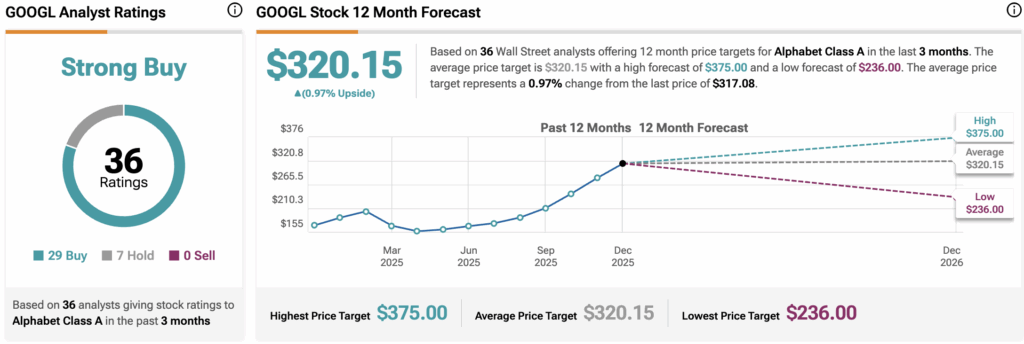
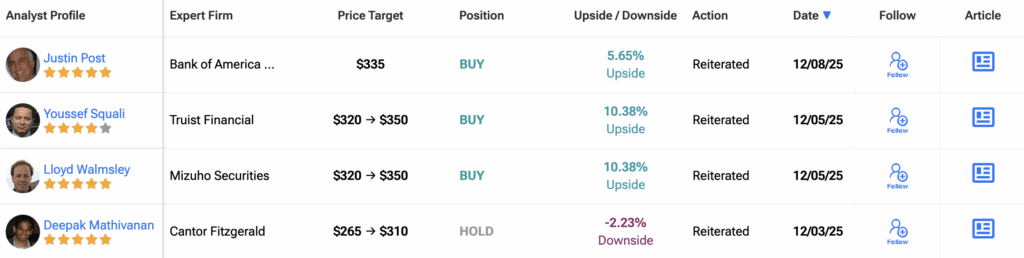
As for Alphabet’s stock, it seems to be holding steady with a Strong Buy consensus among analysts—a clear sign to many investors that things might stay bright. Over the last three months, 29 recommend buying while 7 suggest holding. No one’s giving a sell verdict yet.
The average target price for GOOGL sits at $320.15, which hints at about a 1% upside potential.
Check out more analyst ratings for GOOGL
Disclaimer & DisclosureReport an Issue