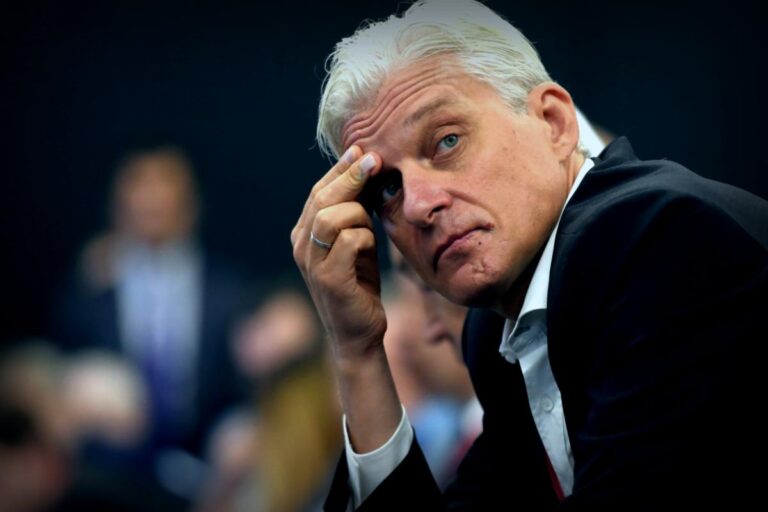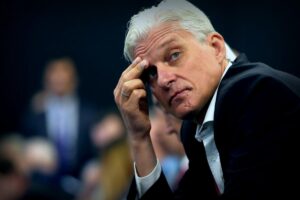


Oleg Tinkov, the former tycoon behind Tinkoff Bank, recently told the world just how damaging a single Instagram post could be. His criticism of the Ukraine war, which he labeled ‘insane,’ came at a staggering cost of around $9 billion. In Tinkov’s view, this incident is an eye-opener when it comes to how dissenting billionaires are treated under Vladimir Putin’s rule.
Once hailed as one of the wealthiest bankers in Russia, Tinkov experienced a drastic fall from grace when he publicly condemned the war via Instagram in April 2022. He didn’t hold back, describing the military’s operations as disorganized and riddled with corruption, suggesting that a staggering 90% of Russians opposed the war, with the remaining 10% being ‘fools.’ He passionately called for a quick and ‘face-saving’ resolution to the conflict.
Just one day after his bold post, it became clear that voicing such opinions came with serious consequences. Tinkov revealed to BBC that high-level executives from his bank received a threatening call from Kremlin-linked officials. In a nutshell: sell his stake and erase his name from the bank, or risk immediate nationalization of the institution, then one of Russia’s largest banks.
A Desperate Fire Sale
The events that unfolded were not about negotiations but rather a forced maneuver, with Tinkov likening his position to that of a hostage. He described being pressured to accept a price for his significant 35% ownership in TCS Group—parent company to Tinkoff Bank—that was merely a fraction of its market value. In his own words, he claimed he had no say in the pricing, feeling like he was being held against his will. As he stated in The New York Times, he eventually sold his stake in April 2022, merely days after his damning Instagram shout.
Soon after, a company affiliated with wealthy metals magnate Vladimir Potanin swooped in to purchase Tinkov’s share. Tinkov articulated his amazement to the BBC that this deal was pegged at only about 3% of the true market value, effectively obliterating nearly $9 billion of his entrepreneurship wealth that took decades to build.
Exile and Anonymity
Following the sale of his assets, Tinkov fled Russia, renouncing his citizenship, and emerged as one of the few notable businessmen to vocally oppose the Kremlin’s actions regarding the war. He claimed that the intimidation tactics included attempts to scrub his name from Tinkoff Bank entirely, eliminating any trace of his pioneering influence in its rise.
This saga accents the trade-offs faced by oligarchs in Russia—walk the line of loyalty or face daunting repercussions. Tinkov’s situation mirrors that of others, like former oil baron Mikhail Khodorkovsky, who was incarcerated for a decade after opposing the government back in 2001. Such examples emphasize the serious risks that dissenters negotiate, even if they once played significant roles in leveraging Russia into economic growth.
While in exile, Tinkov took time to recede but has recently re-emerged in 2025 as an investor in a Mexican fintech called Plata, backed by ex-Tinkoff executives, spotlighting his continued entrepreneurial spirit.
Analysts argue that Tinkov’s saga is part of a more extensive landscape where Kremlin policies thrive on exploitation and trepidation to hold the wealthy elite in check. Recent sanctions and stringent wartime measures make the fortunes within Russia highly tenuous, contingent solely on political allegiance. Meanwhile, the ongoing war continues with President Trump involving himself in discussions with Putin and Ukrainian leader Волodymyr Zelensky, suggesting that negotiations could be closer than anticipated, three years following Tinkov’s explosive social media editorial.