


AI Takes Solar Wind Predictions to the Next Level
Can machines really outsmart the unpredictable solar winds? Well, researchers at NYU Abu Dhabi have managed to do just that! They’ve achieved an incredible 45% boost in how accurately they can predict these solar winds compared to traditional models, plus they’re giving us forecasts up to four days in advance. This exciting development was reported in The Astrophysical Journal Supplement Series, and it’s a game-changer for how we can prepare for solar impacts on our technology.
How It Works
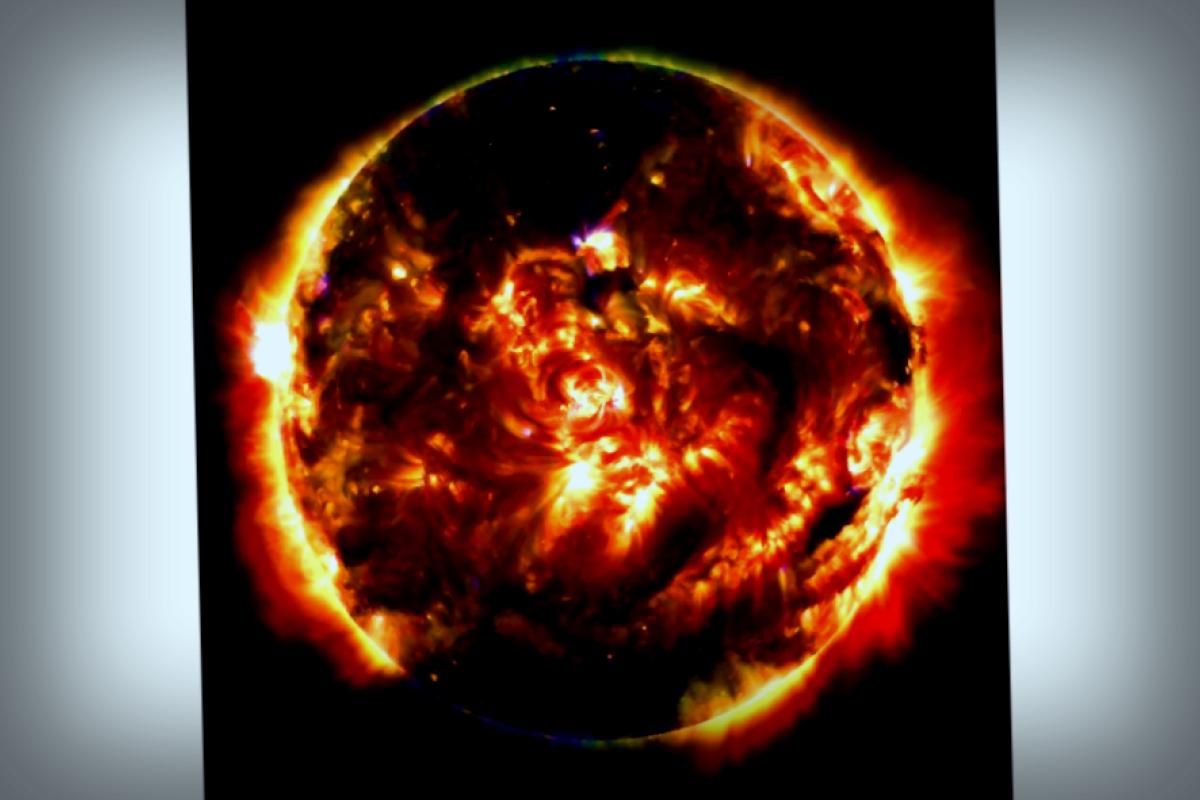
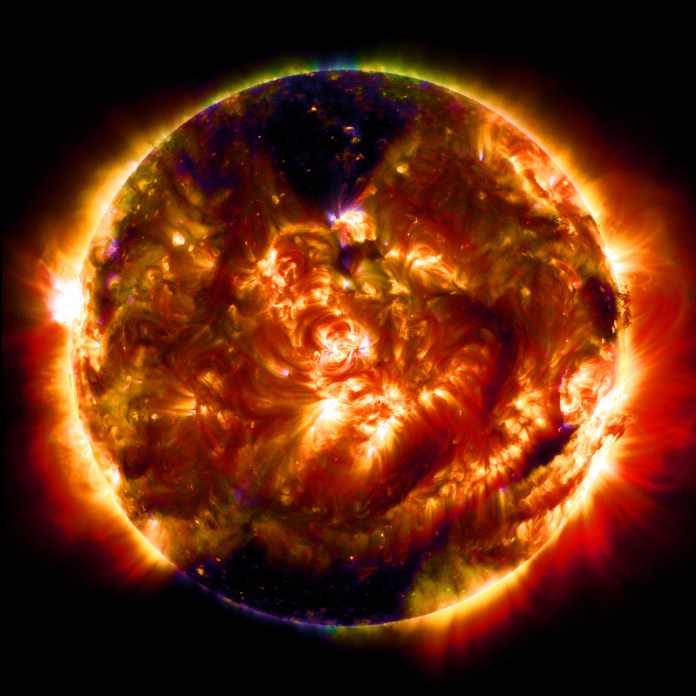
The standout feature of this new forecasting system is its blend of machine learning with stunning high-resolution UV images from NASA’s Solar Dynamics Observatory. After training on nine years’ worth of SDO images and the historical solar wind data, the AI has learned to spot subtle changes in the corona that signal when solar winds are about to ramp up, especially identifying those regions known as equatorial coronal holes. These holes are famous for producing high-speed particle streams which can create geomagnetic storms when they hit Earth’s magnetic field.
The Challenge of Forecasting Solar Winds
Predicting solar winds has always been a tough nut to crack! When charged particles shoot out from the Sun, they can put satellites off course, damage their electronics, and cause big communication issues. Back on Earth, this can result in geomagnetically induced currents messing with transformers and leading to problems in power grids and navigation systems. Just last year, a geomagnetic storm unexpectedly knocked out 40 Starlink satellites, reminding everyone how vulnerable we are in low Earth orbit and the urgent need for precise forecasting.
Preparation is Key
The extended advance warning from the NYU Abu Dhabi model gives operators the chance to take vital precautionary measures. Satellites can tweak their orbits to dodge collision threats, activate safe modes to protect against damage, or adjust their positions to minimize drag. For terrestrial infrastructure, this means energy managers can balance the load on grids or shield delicate sections before things get crazy. There are devices, like the ones set up by the Western Area Power Administration in South Dakota, specifically built to block harmful currents during storms; however, they need to be deployed based on smart predictions.
The Power of Data Fusion
The AI’s edge comes from using both image data and numerical information. UV images help create the spatial context for identifying solar features, while historical wind speed records provide insight into timing patterns. This hybrid method builds on advances seen in other space weather models, like NASA’s Surya Heliophysics Foundational Model, which similarly uses multiple wavelengths of solar observations to anticipate solar flares and particle events. The success of both initiatives highlights the importance of extensive, stable datasets—in these cases, continuous imagery from SDO dating back to 2010 has been essential.
Wide-Ranging Implications
The ripple effects of more accurate solar wind forecasts are vast, enhancing resilience not just for spacecraft but also for aviation, maritime navigation, and sectors relying on GPS. Gaps caused by geomagnetic storms can lead to GPS inaccuracies stretching several hundred meters, which can lead to significant problems in precision farming, resource extraction, and autonomous vehicles. AI-driven forecasting can cut down uncertainties surrounding timing and force, aiding efficient contingency planning across various fields.
The Future of Solar Wind Forecasting
The technology behind these models is rapidly changing. Deep learning frameworks involve complex structures that help extract image features and understand sequences of data, offering deeper insights into solar wind behavior. Meanwhile, probabilistic methods, like Bayesian neural networks, help gauge prediction uncertainty, crucial for deciding whether to invest in costly preventive actions.
To effectively apply these forecasts, we need solid data channels from observatories to decision-making frameworks. NASA’s DSCOVR satellite already gives us near real-time solar wind updates from Lagrange Point 1, but currently, these only provide short notice—just minutes. Expanding this to days requires trustworthy predictive models that can cue automated responses in spacecraft and grid protection gadgets.
By spotting early solar wind intensification, the NYU Abu Dhabi AI is paving the way for that, merging cutting-edge AI technology, ongoing solar observation, and built-in protective solutions to revolutionize our fight against space weather. As solar activity ramps up, having tools that can accurately predict and measure risks will be crucial for maintaining the stability of our interconnected tech systems essential for modern life.